Leave Your Message
0%

Global buyers need more than a low quotation when sourcing Industrial Steel in 2026. Product consistency, delivery control, documentation, and technical support can determine a project’s success. A supplier may offer attractive prices, yet weak packaging can damage coils during ocean transport. Small details matter.

This guide examines leading Industrial Steel suppliers through a practical buyer’s lens. It considers production capacity, steel grades, coil thickness, width tolerances, surface quality, and customization options. It also reviews Mill Test Certificates, inspection procedures, export experience, and response times. Reliableindustrial steel coil suppliers should explain their traceability process clearly. They should also provide realistic lead times, secure packaging, and suitable loading plans for different ports.

Evidence matters. Supplier claims should be checked against certifications, customer references, factory capabilities, and recent delivery records. Some companies communicate well but lack consistent quality across large orders. Others produce excellent coils but respond slowly when specifications change. That difference can affect inventory planning and construction schedules. Not every supplier fits every market. Local standards, payment terms, import procedures, and required certifications still need careful review.

This is not a perfect ranking. Market conditions change quickly. Prices, freight costs, energy expenses, and production schedules can shift during the year. Buyers should request current quotations and sample documents before committing. A careful comparison can reduce surprises, but it cannot replace technical inspection. The strongest supplier is usually the one that combines measurable quality, transparent communication, and dependable performance over time.
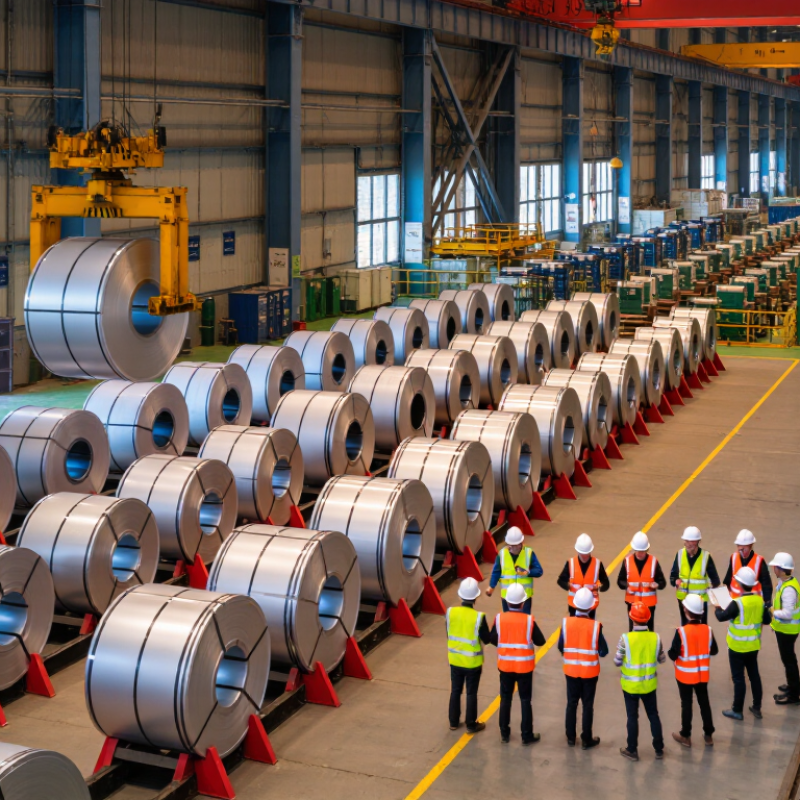
2026 Best Industrial Steel Suppliers for Global Buyers

Industrial Steel Supplier Market Overview for Global Buyers in 2026

In 2026, global buyers are evaluating industrial steel suppliers through more than price. Demand is shifting toward traceable Industrial Steel Materials, stable delivery, and documented quality. Infrastructure, energy, automotive, and machinery projects remain major purchasing sectors. Regional mills and international traders compete through lead times, stock availability, and processing capacity. Buyers increasingly request mill test certificates, heat numbers, dimensional records, and corrosion data before signing contracts. This is practical, not decorative. A missing certificate can delay fabrication for weeks.

Supplier assessment now includes energy reporting, recycled content, workplace controls, and export documentation. These details affect project approvals and financing. Experienced procurement teams compare chemical composition, tensile strength, tolerances, packaging, and inspection methods. They also check whether a supplier can repeat the same grade across several shipments. Evidence matters. Clear answers to technical questions often reveal more than polished catalogs. Samples can mislead. Forecasts may also fail when freight costs or regional demand change suddenly.

Tips: Request a recent third-party inspection report. Confirm delivery terms, loading photos, and replacement procedures in writing. Order a small trial batch when specifications allow. Keep every record.

Key Steel Products and Applications Across Industrial Sectors

2026 Best Industrial Steel Suppliers for Global Buyers

Industrial steel suppliers support construction, machinery, transport, energy, and infrastructure projects. The World Steel Association reported about 1.88 billion tonnes of crude steel production in 2024. Construction remains the largest steel-consuming sector. Automotive production also depends heavily on advanced flat products. Industrial buyers should compare carbon steel, Stainless Steel, galvanized sheet, alloy plate, wire rod, and structural sections. Each product serves a different operating environment.

Carbon steel plate suits bridges, pressure vessels, and heavy machinery. Stainless steel resists corrosion in food, chemical, and marine facilities. Galvanized Coil protects roofing, ducts, and outdoor equipment. High-strength low-alloy grades can reduce component weight. However, higher strength may complicate welding and forming. The International Energy Agency estimates that steel production creates roughly 7% to 9% of global energy-related carbon dioxide emissions. Grade selection now affects both performance and environmental reporting.

Tips: Request mill test certificates, heat numbers, dimensional tolerances, and coating data. Check whether certificates follow recognized standards. Traceability matters. Ask suppliers about production location, inspection controls, packaging, and delivery history. A low unit price can become expensive after delays, rework, or corrosion failures. Buyers should also verify recycled-content claims and product carbon data. These documents are useful, but not perfect. Site conditions can expose weaknesses that laboratory tests miss.

Criteria for Evaluating Reliable International Steel Suppliers

Reliable international steel suppliers need more than competitive prices. The World Steel Association reported global crude steel production of about 1.84 billion tonnes in 2024. This scale makes verification essential. Buyers should review mill test certificates, chemical results, heat numbers, and production dates. Certificates must match the shipped coil, plate, or bar. A small mismatch can create expensive delays.

Capacity pressure also matters. The OECD Steel Committee reported that global steelmaking capacity could reach roughly 2.5 billion tonnes by 2026. Excess capacity may encourage aggressive quotations. It can also signal unstable demand or weaker supplier discipline. Evaluate ISO 9001 systems, independent inspection access, export experience, and complaint response times. Ask for recent delivery records, not only references selected by the supplier. Payment terms, packaging quality, port access, and Incoterms deserve equal attention. No checklist is perfect. A supplier may pass a document review and still fail during loading.

Tips: Request a sample certificate before ordering. Confirm traceability from heat number to invoice. Compare third-party inspection findings with supplier data. Check whether the quoted grade meets ASTM, EN, or project-specific requirements. Keep a written scorecard for quality, delivery, finance, and communication. I would also test a small shipment first, because trust should be measured, not assumed.

Regional Comparison of Leading Industrial Steel Supply Markets

Regional differences matter when global buyers evaluate Industrial steel solutions. The World Steel Association reported 1.88 billion tonnes of crude steel production in 2024, with China contributing about 1.00 billion tonnes. East Asia therefore offers exceptional volume, broad product coverage, and competitive ocean-shipping options. However, buyers should examine export controls, port congestion, and longer transit times. A low mill price can lose its advantage beside a delayed construction schedule.

South Asia is gaining strategic importance. India produced approximately 149 million tonnes in 2024, according to World Steel Association data. Its expanding capacity supports infrastructure projects and regional distribution. North America provides strong demand for specialized plate, automotive grades, and energy-related products, while regional trade rules can influence landed costs. Europe remains valuable for technically demanding grades and documented emissions performance. The OECD continues to warn about global excess capacity, making supplier utilization and order visibility important purchasing indicators.

The numbers need careful reading. Production volume does not prove consistent chemistry, surface quality, or delivery discipline. The International Energy Agency estimates steelmaking creates roughly 7% to 9% of global energy-related emissions, so carbon data increasingly affects procurement decisions. Buyers should request recent inspection records, heat certificates, dimensional tolerances, and realistic lead-time evidence. A useful comparison includes freight distance, inventory location, payment risk, and recovery plans. It is easy to overvalue scale. Sometimes, a smaller regional source performs better when replacement coils must arrive within days.

2026 Best Industrial Steel Suppliers for Global Buyers – Regional Comparison of Leading Industrial Steel Supply Markets
Supply Market 2024 Crude Steel Output Primary Supply Strength Common Industrial Product Mix Standards Commonly Supported Export & Logistics Profile Best Fit for Global Buyers
Mainland China 1,005.1 Mt
Approximately 53.4% of global output
Largest integrated steelmaking market, extensive upstream capacity, broad product availability, and strong large-volume manufacturing support. Hot-rolled coil Cold-rolled coil Galvanized steel Steel plate Rebar Wire rod GB/T, ASTM, EN, JIS, API-related specifications, and project-specific requirements subject to mill approval. Strong container and bulk-shipping connectivity from major eastern and northern ports. Ocean freight is usually competitive for full-container and breakbulk orders; import duties and trade remedies must be checked by destination. Large infrastructure projects, machinery manufacturing, construction steel, fabricated components, and buyers seeking broad product choice.
European Union 129.9 Mt
Approximately 6.9% of global output
High emphasis on quality management, traceability, advanced flat products, engineering steel, and lower-carbon production pathways. Automotive sheet Electrical steel Heavy plate Stainless steel Specialty bar EN and European execution standards, ISO quality systems, CE-related project documentation, and customer-specific automotive or engineering specifications. Dense rail, road, inland-waterway, and short-sea networks. Regional delivery can be efficient, while imports may be affected by quota systems, carbon reporting, and trade-defense measures. Automotive, energy equipment, precision engineering, regulated construction, and buyers prioritizing documentation and traceability.
India 149.6 Mt
Approximately 7.9% of global output
Rapidly expanding production base, strong long-product capacity, competitive conversion costs, and growing export capability. Hot-rolled coil Structural sections Rebar Wire rod Billets Steel plate Indian Standards, ASTM, EN, JIS, and project-specific international specifications depending on producer and product category. Good access to Arabian Sea and eastern- coast shipping routes. Port selection and inland haulage can materially affect landed cost, especially for inland destinations. Infrastructure, construction, industrial fabrication, energy projects, and buyers seeking competitive long-product or semi-finished steel supply.
Japan 84.0 Mt
Approximately 4.5% of global output
Advanced process control, consistent mechanical properties, high-quality surface finishing, and strong technical service. Automotive sheet Electrical steel Specialty plate Engineering bar Seamless products JIS, ASTM, EN, ISO, and detailed customer specifications used in automotive, machinery, energy, and industrial applications. Reliable deep-water port infrastructure and established export procedures. Best suited to specification-sensitive shipments rather than purely price-driven bulk purchasing. Automotive components, precision machinery, high-performance equipment, energy systems, and demanding quality-critical applications.
United States 79.5 Mt
Approximately 4.2% of global output
Strong domestic demand base, advanced value-added flat products, specialty grades, and extensive technical compliance capabilities. Hot-rolled coil Cold-rolled coil Coated sheet API line pipe Plate Specialty steel ASTM, ASME, API, SAE, AISI-related designations, ISO systems, and customer-specific qualification requirements. Efficient inland rail and road networks with Gulf, Atlantic, and Pacific port access. Imported steel may be subject to tariffs, quotas, product exclusions, and country-of-origin rules. Energy infrastructure, transportation equipment, industrial machinery, construction, defense-related applications, and buyers requiring North American compliance.
South Korea 63.6 Mt
Approximately 3.4% of global output
Highly integrated production, strong flat-steel capability, export-oriented manufacturing, and reliable quality consistency. Automotive sheet Shipbuilding plate Cold-rolled steel Galvanized steel Electrical steel KS, ASTM, JIS, EN, ISO, shipbuilding specifications, and automotive customer standards. Excellent container and bulk-port infrastructure serving East Asia, Southeast Asia, North America, and Europe. Export availability can vary with domestic industrial demand. Automotive, shipbuilding, appliances, electrical equipment, precision fabrication, and large industrial export programs.
Türkiye 36.9 Mt
Approximately 2.0% of global output
Flexible electric-arc-furnace production, strong long-product exports, proximity to Europe, the Middle East, North Africa, and the Black Sea. Rebar Wire rod Merchant bar Billets Structural sections Steel pipe EN, ASTM, ISO, Turkish Standards, and project-specific construction specifications. Strategic Mediterranean, Aegean, and Black Sea access with strong short-sea and breakbulk options. Regional trade measures and currency movements should be included in landed-cost analysis. Construction, rebar-intensive infrastructure, steel service centers, pipe projects, and buyers serving Europe, the Mediterranean, and nearby regions.
Brazil 33.7 Mt
Approximately 1.8% of global output
Abundant raw-material base, integrated flat-steel production, strong semi-finished export capability, and access to Atlantic shipping routes. Slabs Hot-rolled coil Plate Long products Wire rod Semi-finished steel ABNT, ASTM, EN, ISO, and customer-specific industrial and infrastructure standards. Atlantic ports support bulk, breakbulk, and container shipments. Inland logistics can be a significant cost factor because of the country’s geographic scale. Mining and energy equipment, infrastructure, construction, heavy fabrication, and semi-finished steel procurement.
Russia and CIS Supply Region Approximately 77.7 Mt
Regional 2024 output; approximately 4.1% of global output
Large raw-material base, integrated mills, established plate and long-product production, and extensive rail-linked industrial infrastructure. Slabs Heavy plate Rail products Rebar Wire rod Pipe GOST, ISO, ASTM, and project-specific technical requirements, subject to destination-market acceptance. Rail and Black Sea, Baltic, Caspian, and Far East corridors are relevant, but sanctions, payment restrictions, insurance, routing, and import controls can materially affect availability. Only where destination-country compliance, sanctions screening, banking, insurance, and documentation requirements have been fully verified.

Data interpretation: Crude steel output figures are rounded 2024 production values reported by the World Steel Association. Product availability, standards, freight routes, tariffs, quotas, sanctions, and delivery times vary by grade, order size, origin, destination, and contract terms.

Reference basis: World Steel Association, 2025 World Steel in Figures; International Trade Centre trade classifications; ISO, ASTM, EN, JIS, KS, ABNT, GOST, and relevant national standards documentation. Output shares are calculated against approximately 1,883 million tonnes of global crude steel production in 2024.

Quality Standards, Certifications, and Regulatory Compliance

For industrial steel coil buyers, quality begins with traceable production, not attractive pricing. A reliable supplier should provide mill test certificates, heat numbers, chemical analysis, and mechanical results. Check tensile strength, yield strength, elongation, thickness, and coating mass against the purchase specification. Small differences can affect forming, welding, and service life.

Certifications must match the destination market and the contract. ISO 9001 supports controlled processes, but it does not prove every coil meets your requirements. Standards such as ASTM, EN, or JIS should be stated clearly before production. Ask for independent inspection when the order is large. Review calibration records and inspection reports. A certificate can still hide a weak sampling method. This deserves attention.

Tips: Request one sample document before ordering. Match the heat number on the certificate with the coil label. Confirm origin records, packing details, and inspection dates. Check whether the supplier follows applicable import, environmental, and product-safety rules in your market. Keep written approval for any deviation. Mistakes happen, even in experienced factories.

2026 Best Industrial Steel Suppliers for Global Buyers

Quality Standards, Certifications, and Regulatory Compliance

This benchmark compares representative minimum yield-strength values for widely used structural steel grades. Higher strength does not by itself indicate better supplier quality; buyers should also verify material traceability, test results, production controls, and compliance documentation.

Quality Management

Check for ISO 9001-based quality systems, process control, calibration records, and corrective-action procedures.

Material Certification

Request heat numbers, chemical analysis, mechanical test results, and EN 10204 Type 3.1 inspection certificates where applicable.

Regulatory Compliance

Confirm product-specific requirements such as CE or UKCA marking, customs documentation, sanctions screening, and destination-market rules.

Reference basis: ASTM A36/A36M, EN 10025-2 S275JR, JIS G 3101 SS400, and GB/T 700 Q235B. Values are representative minimums for commonly specified thickness ranges; always verify the current standard edition and purchase specification.

Pricing, Logistics, and Risk Management in Global Steel Procurement

For global buyers, Industrial Steel Coils require more than a low quotation. The World Steel Association’s October 2024 Short Range Outlook projected global steel demand at about 1.75 billion tonnes in 2025. That scale makes regional price gaps temporary, not guaranteed savings. Buyers should compare base prices, alloy surcharges, freight, insurance, duties, and currency exposure. A fixed annual price can look safe. It may also hide an expensive premium.

Logistics can change the calculation quickly. UNCTAD’s Review of Maritime Transport 2024 states that over 80% of world merchandise trade moves by sea. Route disruptions can add weeks, storage charges, and moisture risk. Specify port limits, discharge windows, demurrage responsibility, and weather-protected storage. Coils should arrive with verified weight, heat numbers, mill certificates, and independent inspection records. Small paperwork gaps can stop a shipment.

Risk controls should be practical. Use two qualified supply regions where possible, not merely two trading companies. Set delivery milestones and trigger reviews when freight or steel indices move sharply. The OECD Steel Outlook 2025 highlighted continuing global excess-capacity pressures, which can intensify price volatility and forced inventory decisions. Buyers should test supplier capacity, financial resilience, and traceability before signing. This is where procurement often becomes uncomfortable. Forecasts are imperfect. Contingency stock, clear claims procedures, and documented escalation paths still matter.

ASTM A1008 Pickled Steel Coil from China: Coating Adherence Insights from AISI and World Steel Association Reports

ASTM A1008 pickled steel coil from China offers a clean, controlled surface designed to support reliable coating adherence. Industry insights associated with AISI and World Steel Association reports emphasize that removing mill scale, iron oxides, and other surface contaminants is essential for consistent paint bonding and corrosion protection. Our coils are processed in a hydrochloric acid bath with a controlled 5–15% concentration, followed by advanced multi-stage rinsing and neutralization. This treatment produces a chemically clean surface meeting Sa 2.5 cleanliness according to ISO 8501-1, helping coatings spread evenly and reducing the risk of peeling, blistering, or premature delamination.

The carefully treated surface also limits subsurface decarburization and can improve cold-rolling efficiency by approximately 30%. With a surface roughness of Ra 1.5–3.2 µm, the coil provides a balanced profile for mechanical anchoring and uniform coating coverage across various industrial applications. Manufactured to meet ASTM A1008 requirements, these pickled coils are suitable for components that require dependable forming performance, stable surface quality, and strong adhesion after painting or further finishing. Direct supply from our Chinese factory supports consistent specifications, efficient production planning, and customized coil solutions for demanding processing environments.

FAQS

What should global buyers compare when choosing an industrial steel supplier?

Compare price, delivery stability, processing capacity, and documented quality. Request heat numbers, mill certificates, and dimensional records. A polished catalog is not enough.

Which steel products serve common industrial applications?

Carbon steel plate suits bridges, pressure vessels, and heavy machinery. Stainless steel supports corrosive environments. Galvanized coil protects outdoor equipment, roofing, and ducts. High-strength grades can reduce weight, but welding may become harder.

Why are mill test certificates important?

They document chemical composition, strength, dimensions, and production details. A missing certificate can delay fabrication for weeks. Keep every record. Still, documents cannot predict every site problem.

How can buyers verify product traceability?

Match heat numbers across coils, certificates, inspection reports, and shipping records. Check production location and inspection methods. Verify the same grade across repeated shipments. Samples can mislead.

What costs belong in a steel purchasing comparison?

Include the base price, alloy surcharges, freight, insurance, duties, and currency exposure. A low quotation may hide storage or rework costs. Fixed prices are not always cheaper.

How can buyers reduce shipping and logistics risks?

Confirm port limits, discharge windows, storage conditions, and demurrage responsibility. Request loading photos and weather-protected storage. Verify weights before shipment. Routes can change quickly.

Should buyers order a trial batch before a large contract?

A small trial batch can test dimensions, packaging, certificates, and delivery performance. Use one when specifications allow. It exposes problems earlier. Not every defect appears in laboratory testing.

How should buyers manage supply disruptions and price volatility?

Qualify suppliers from two reliable regions when possible. Set delivery milestones and review triggers for major freight changes. Maintain practical contingency stock. Forecasts fail sometimes.

Conclusion

In 2026, the global Industrial Steel market continues to support construction, energy, transportation, manufacturing, and heavy engineering. Buyers can source a wide range of products, including structural sections, plates, coils, bars, pipes, and customized components for demanding industrial applications. This overview explains how regional supply strengths, production capacity, infrastructure, and export capabilities influence international purchasing decisions, while highlighting the importance of selecting suppliers with stable operations and consistent product quality.

Reliable global procurement depends on more than price. Buyers should evaluate technical expertise, production capacity, delivery performance, financial stability, communication, and after-sales support. Quality standards, material traceability, testing procedures, certifications, and regulatory compliance are essential for reducing operational and legal risks. The article also examines pricing factors, shipping arrangements, customs planning, payment terms, inventory strategies, and contingency measures. By comparing regional markets and applying a structured supplier assessment process, international buyers can improve cost control, strengthen supply continuity, and build more resilient Industrial Steel procurement programs.
Lila

Lila

Lila is a dedicated marketing professional at Guangzhou Chengxin Metal Co., Ltd., where she has been instrumental in elevating the company's presence since its establishment in 2018. Nestled in the bustling coastal city of Guangzhou, this leading steel processing and distribution service provider......
Previous 2026 Top Steel Exporters What Global Buyers Need to Know?