China is a massive producer of steel, so it's no surprise that it's a go-to place for cold-rolled products. According to the World Steel Association's figures for 2025, they made over a billion tonnes of crude steel in 2024 – that's 1,005.1 million tonnes, to be exact. But hey, that number just shows they have the scale, not that every coil is top-notch. So buyers still have to do their homework – checking each mill's specs, quality controls, and inspection records.
Okay, so you want to know which High-Grade Cold-Rolled Coil manufacturers in China are actually worth your time? This guide focuses on evidence, not just fancy claims. Here's the thing—this type of coil is popular for a reason: its thickness is consistent, the surface is smooth, and it forms easily. Those properties aren't just on paper; they show up in real-world uses like appliance panels, car parts, and precision enclosures. So if that's your game, you're looking at the right info. You know, the OECD’s Steel Outlook for 2023 actually gives you a pretty good sense of the global steel market and the whole capacity squeeze. But here’s the thing – just because a supplier has a huge footprint doesn’t mean they’ll always be reliable, right?
You'll want to ask for the grade designation, the dimensional tolerances, and if it's relevant, coating details. Also, ask for test documentation. Honestly, a clear sample report can tell you way more than a fancy brochure ever will. And when you're checking out a manufacturer, dig into how they handle surface defects, coil edges, packaging, and traceability. These small things? They matter a lot. I've seen coils that look fantastic under bright warehouse lights, but then you form them and marks show up. It's so easy to miss that.
Look, the manufacturers we've talked about? You really need to evaluate them against your own process—not just some generic ranking. Ask for recent certificates, and double-check that the properties they report actually match the batch you're getting. A shortlist is handy, but it's no substitute for doing your own technical review. And honestly, some info might be incomplete, so take any promotional claims with a grain of salt and verify them yourself.
What Defines High-Grade Cold Rolled Steel Coil
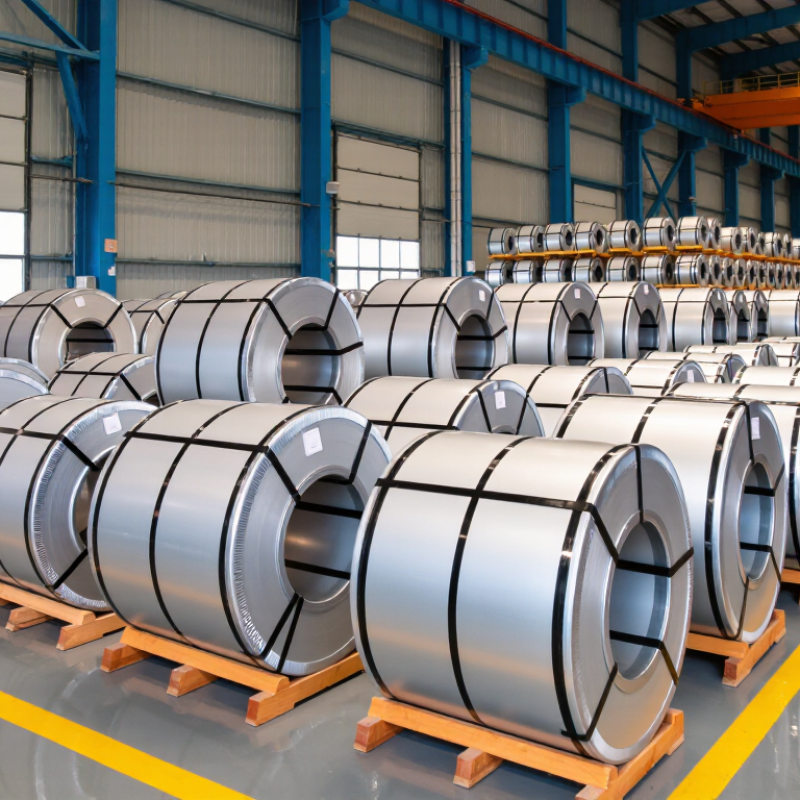
High-grade cold rolled coil is defined by consistency, not a shiny surface alone. The World Steel Association’s World Steel in Figures 2024 reports global crude steel production of 1,892.2 million tonnes in 2023, a scale that makes reliable process control essential. For buyers, key checks include thickness tolerance, flatness, surface condition, chemistry, and mechanical properties. ASTM A1008/A1008M provides requirements for cold-rolled carbon Steel Sheet, but the required grade still depends on the intended forming operation.
Look closely at the coil edge and surface under clear, even light. Deep scratches, rust spots, uneven edges, or repeating marks can signal handling or rolling issues. Useful mill records include test certificates, coil identification, and measured values for tensile strength and elongation. Ask how samples were taken; a single result may not represent an entire coil. Small details matter.
For deep drawing, stable ductility can reduce splits around tight corners. For exposed panels, smoothness and consistent appearance may matter more. Food-Grade Tinplate is a downstream packaging material, not proof that a cold-rolled coil is suitable for food contact. Coating, processing, and applicable product requirements also matter. I would not judge quality by one certificate alone; real production can still reveal variation that paperwork misses.
Key Grades, Specifications, and Performance Properties
China’s high-grade cold rolled coil is selected by grade, thickness, surface finish, and forming demand—not strength alone. EN 10130:2006 gives DC01 a tensile-strength range of 270–410 MPa and minimum 28% elongation. Its DC04 deep-drawing grade has a narrower 270–350 MPa range and minimum 38% elongation. The extra stretch helps with formed panels, but tooling and lubrication still matter.
For specification checks, confirm the standard, test direction, thickness tolerance, flatness, and surface condition. ASTM A1008 covers cold-rolled commercial, drawing, and high-strength low-alloy sheet categories. These categories are not interchangeable: an HSLA grade can offer higher strength, while a drawing grade prioritizes formability. WorldAutoSteel’s AHSS Application Guidelines identify 590 MPa and 780 MPa tensile-strength classes for advanced steels, useful reference points when comparing strength-focused designs. Small differences matter.
Automotive Zn-Fe Steel Grade describes a zinc-iron coated product, not a standalone cold-rolled substrate grade; buyers should specify both coating and base-steel properties. Request mill test results and verify chemistry, tensile strength, yield strength, and elongation against the purchase specification. Coil edges and surface marks can also affect stamping quality. A practical caution: published values are limits, not a promise that every coil will behave identically in a press.
How Cold Rolled Coils Are Manufactured in China
In China, cold rolled coil production begins with hot rolled steel, not a finished sheet. The coil is inspected, then cleaned in a pickling line. Acid removes oxide scale from the surface. Operators monitor strip tension and line speed because uneven handling can affect later rolling. The steel passes through a cold rolling mill, where rollers reduce its thickness at room temperature. Several passes may be needed. It is precise work, but not perfectly uniform by nature.
After rolling, the strip is annealed in a controlled furnace to restore formability. Temperature, time, and the steel grade all matter. The coil may then receive a light temper pass to improve flatness and surface finish. This stage can reveal small defects that were less visible earlier. They should be checked, not waved away. Quality teams measure thickness, width, surface condition, and mechanical properties, with results recorded against the production requirements. Some buyers compare cold rolled products with Construction-Grade Steel Coils, but the intended use and specification must guide that choice. Packaging also matters: edge protection and moisture-resistant wrapping help limit damage during storage and shipment. Even a well-run process needs careful checks at every stage.
China’s Cold Rolled Coil Manufacturing Landscape
China’s cold-rolled coil sector sits within a vast, interconnected steel industry. World Steel Association data put China’s crude steel production at about 1,005 million tonnes in 2024. That scale supports broad access to hot-rolled feedstock, processing lines, and logistics. But crude steel output is not cold-rolled coil output. One limitation worth noting.
Cold rolling reduces strip thickness and improves surface finish and dimensional consistency. Buyers often assess thickness tolerance, width, flatness, surface condition, and coating needs against their end use. A coil intended for appliance panels may need a cleaner finish than material used for less visible components. Details matter. Production capacity alone cannot confirm stable quality; process control and inspection records matter too.
China Customs reported steel-product exports of about 110.7 million tonnes in 2024. This figure covers a broad range of steel products, not cold-rolled coil alone, so it should not be read as a coil-specific market measure. For buyers comparing High-quality cold-rolled steel coils, useful checks include Mill Test Certificates, sample inspection, packaging protection, and clear delivery specifications. I would still ask how a supplier handles deviations. Published capability statements can sound reassuring, but actual consistency is what counts.
Quality Standards, Testing, and Certification Practices
For high-grade cold rolled coil, quality starts with a clearly defined specification. Buyers should confirm the grade, thickness tolerance, width, surface finish, and intended forming process before production. Applicable standards vary by market and end use, so the purchase order should name the required standard and its revision. A mill test certificate should link the coil number to chemical composition and mechanical results, including yield strength, tensile strength, and elongation.
Testing should match the risks. Check thickness across the strip, inspect edges and surfaces under consistent lighting, and verify mechanical properties using documented sampling procedures. If coating or special surface treatment is specified, confirm its measurement method and acceptance limits. Certification can support confidence, but it does not replace receiving inspection. Even a well-prepared report may leave questions about handling damage or local surface marks. Small details matter.
Tips: Ask for a sample certificate before ordering, then compare its fields with your specification. Record coil IDs, inspection results, and any deviations at receipt. Keep records. If a result sits near a tolerance limit, discuss retesting and measurement uncertainty with the supplier rather than relying on a single number.
China Cold Rolled Coil: Quality Assurance and Certification Cycle
A representative three-year management-system certification cycle. Product testing—such as checks of thickness, surface condition, and mechanical properties—is performed separately according to the applicable product standard, grade, and purchase specification.
The schedule is illustrative, not a fixed audit calendar. ISO/IEC 17021-1 requires surveillance audits at least once in each calendar year, except in recertification years; the certification body sets the actual dates.
Common Industrial Applications of High-Grade Cold Rolled Coils
Common Industrial Applications of High-Grade Cold Rolled Coils
High-grade cold rolled coils are used where smooth surfaces, consistent thickness, and reliable forming matter. In automotive production, they can become interior panels, brackets, and selected body components. Appliance makers use them for refrigerator doors, washing machine cabinets, and oven housings. The even finish supports painting and coating, but surface preparation still matters.
Electrical cabinet makers value predictable sheet dimensions for doors, enclosures, and mounting plates. In furniture and storage systems, coils are formed into drawer sides, shelving, and metal frames. Precision equipment manufacturers may use them for covers and small fabricated parts. The best choice depends on thickness, strength, forming needs, and the final environment. Cold rolled steel is not automatically corrosion-resistant; exposed parts may need suitable coatings or other protection.
Tips: Confirm the grade, thickness tolerance, and surface requirements before ordering. For deep drawing, test a sample with the intended tooling. Small differences can affect forming. Also check how parts will be stored and finished. A clean coil can still develop surface issues if handling or storage is poor. It is worth reviewing these details early, though production schedules sometimes make that harder.
Conclusion
This article explains what distinguishes a High-Grade Cold-Rolled Coil, including its smooth surface, precise dimensions, consistent thickness, and dependable mechanical performance. It outlines common steel grades and specifications, along with properties such as strength, formability, and surface quality. Readers will also learn how coils are produced in China, from hot-rolled feedstock preparation and pickling to cold reduction, annealing, and finishing, and gain an overview of the country’s manufacturing landscape.
The guide offers practical criteria for evaluating Chinese manufacturers, including production capability, process control, communication, and delivery reliability. It also describes how quality is assessed through inspections, mechanical and dimensional testing, and relevant certification practices. Finally, it surveys common applications in automotive components, household appliances, construction, and general manufacturing, helping buyers match coil characteristics to their intended use and make informed sourcing decisions.