Picking the right Abrasion Resistant Steel for projects around the world? It’s not just about stacking up hardness numbers. A quarry truck body, a conveyor liner, a dredging bucket—they all run into very different wear situations. Sliding abrasion, impact, corrosion, temperature... any of these can flip what the best option is. So engineers really ought to start with what’s actually happening in the field, not just whatever a supplier’s brochure says. Honestly, stuff like site photos, material flow, maintenance records, and failure samples can give you a lot of useful context. It's the little things that matter, you know? For example, a plate that holds up great in dry mining might not do so well once you throw it into wet, abrasive slurry.
When you're picking a grade, don't just look at one thing—hardness, toughness, thickness, forming limits, and weldability all need to be weighed together. Sure, higher hardness can give you better wear resistance, but it can also make fabrication harder and raise the risk of cracking. And don't forget that chemical composition and heat treatment play a big role in performance, too. It's a good idea to ask suppliers for mill certificates, heat-treatment records, dimensional data, and details on test methods. For critical batches, independent inspection before shipment can really help verify things. Sure, recognized standards can be a big help - but they're not a substitute for validating things on a project-by-project basis. Requirements vary from country to country, so it's really up to local engineers to check which design, welding, and safety rules actually apply.
Choosing a reliable supplier isn't just about getting the best quote. You also want to look at their production capacity, traceability systems, export experience, packaging, and what kind of replacement support they offer. A good supplier will be upfront about lead times, too—including possible inspection and port delays. If you can, run a trial panel or a small controlled pilot section first. That often exposes weak spots before you commit to a full installation. Sure, it takes extra time. But an unexpected shutdown will cost you a lot more. And honestly? No choice is ever perfect. Wear data can be patchy, and lab tests don't always match what happens on site. Honestly, that uncertainty is exactly the kind of thing worth capturing in a documented risk review. When operating conditions shift, teams can pick steel with a lot more confidence if they pull together hands-on experience, hard technical evidence, and open, transparent communication.
Define Abrasion Resistant Steel and Its Role in Global Projects
Abrasion Resistant Steel is alloy steel engineered to withstand repeated rubbing, impact, and sliding wear. Manufacturers usually quench and temper it, creating a hard surface with useful toughness underneath. Hardness is commonly reported in Brinell units, such as HBW 400 or HBW 500. These numbers help, but they do not tell the whole story.
Its role becomes clearer in global projects. Mining hoppers, conveyor liners, dump bodies, cement equipment, and port structures face constant contact with rock, sand, or scrap. The World Steel Association reported 1.89 billion tonnes of crude steel production in 2023. The USGS Mineral Commodity Summaries 2024 estimated global iron ore mine production near 2.5 billion metric tons in 2023. These figures reflect the scale of material movement that creates severe wear. A suitable plate can reduce replacement frequency and equipment downtime. However, higher hardness may reduce weldability, impact resistance, or forming performance. A small mistake matters.
Project teams should compare operating temperature, impact energy, particle size, plate thickness, and welding procedures. Corrosion and abrasion are different problems. Coastal or chemical environments may require additional protection, even when the plate is abrasion resistant. Buyers should request mill certificates, hardness test results, impact data, and traceability records. When evaluating corrosion-resistant steel suppliers, confirm whether their material actually meets the project’s abrasion, fabrication, and regional compliance requirements. Price alone is a weak selection tool. Sometimes, a slightly softer grade performs better because it survives impact and repairs more easily.
How to Choose Abrasion Resistant Steel for Global Projects?
Abrasion resistant steel is carbon or low-alloy steel engineered to withstand material loss caused by sliding, impact, or friction. Hardness is a key selection factor, but plate thickness, impact conditions, weldability, forming requirements, temperature, and applicable standards must also be evaluated.
The chart uses common nominal Brinell hardness classes: AR400, AR450, and AR500. Higher hardness generally improves resistance to sliding abrasion, while lower-hardness grades usually offer better weldability, toughness, and formability. Actual hardness ranges and technical guarantees vary by product specification and mill certificate. Hardness testing is commonly conducted according to ISO 6506-1 or ASTM E10.
Identify Wear Conditions and Project Performance Requirements
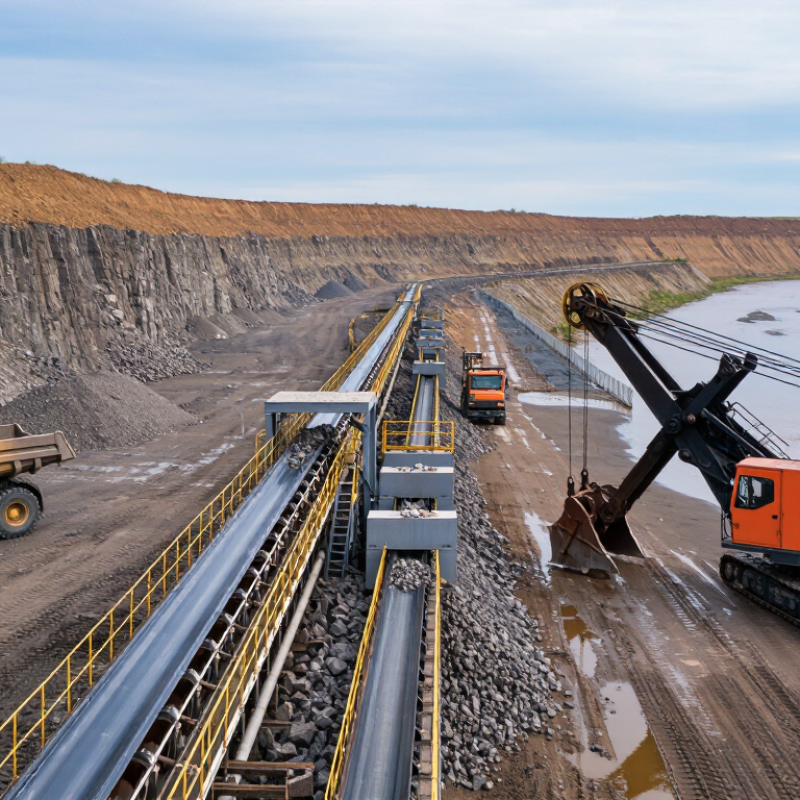
Choosing abrasion resistant steel starts with the wear condition, not a hardness number. On a quarry conveyor, sharp stone may gouge plate, while wet sand creates slower, polishing wear. Impact changes the decision. Record material size, drop height, contact pressure, movement speed, moisture, and operating temperature. Ask operators where thinning appears after several weeks. Photos and thickness readings often reveal patterns that drawings miss.
Project performance requirements must be equally specific. Define the expected service life, allowable weight loss, maintenance access, and replacement time. An extremely hard grade can resist sliding wear, but it may crack under repeated impact. A tougher option may last longer in practice, even if its laboratory hardness is lower. That trade-off deserves testing. Use representative samples when possible. Test them with the actual abrasive, temperature, and loading direction. Do not rely on a single wear index.
Fabrication also affects performance. Confirm plate thickness, forming limits, cutting method, preheating needs, and welding procedure before purchase. Request traceable test certificates and verify hardness across the plate, not at one convenient point. Field experience shows that poor fit-up can shorten service life more than a small grade difference. This is easy to underestimate. Still, site data may be incomplete. Document assumptions, review them with fabricators and operators, and leave room for a controlled trial. Real conditions are rarely neat.
Compare Steel Grades by Hardness, Toughness, and Weldability
How to Choose Abrasion Resistant Steel for Global Projects?
Hardness is the fastest screening tool, but it cannot decide everything. AR400 steel typically measures about 360–440 HBW, while AR500 commonly reaches 470–530 HBW. These ranges follow common mill practices and should be verified under ISO 6506-1 testing. Higher hardness can reduce gouging from crushed rock. It may also increase cracking risks during forming or welding.
Toughness matters when equipment faces impact, cold weather, or sudden loading. Charpy V-notch results should be checked at the project design temperature, not only at room temperature. Quenched and tempered structural grades, such as S690-class steels, often provide yield strengths near 690 MPa. Their toughness depends on the delivery condition and test temperature. The EN 10025-6 framework requires documented impact performance for relevant grades. Numbers vary. Design teams should read the actual mill certificate.
Weldability depends heavily on carbon equivalent, thickness, and preheating control. A lower carbon equivalent usually supports safer site welding, although qualified procedures remain essential. The International Institute of Welding commonly uses carbon-equivalent methods to assess cracking sensitivity. For outdoor projects, avoid confusing abrasion resistance with atmospheric protection. A Corrosion-resistant steel coil may resist moisture better, but it may not survive heavy mineral impact. The World Steel Association reported global crude steel production above 1.8 billion tonnes in 2023, yet local supply quality still differs. I have seen specifications overvalue hardness and undervalue toughness. That is an expensive lesson. Compare hardness, Charpy data, weld procedure limits, plate thickness, and inspection records before approval.
How to Choose Abrasion Resistant Steel for Global Projects? — Compare Steel Grades by Hardness, Toughness, and Weldability
| Generic Steel Grade | Typical Brinell Hardness
(HBW) | Relative Abrasion Resistance | Toughness and Impact Performance | Weldability | Forming and Machining | Typical Applications | Selection Consideration |
| AR400 | 360–440 HBW | Medium–High | Generally better toughness than higher-hardness grades. Actual Charpy impact values depend on the product specification, plate thickness, test temperature, and heat treatment. | Good
Usually the easiest option among the listed abrasion-resistant grades when qualified welding procedures and low-hydrogen consumables are used. | Moderate cold-forming capability. Machining requires wear-resistant tooling and controlled cutting parameters. | Dump bodies, liners, chutes, hoppers, buckets, structural wear components, and general material-handling equipment. | A balanced choice when impact loading, fabrication ease, and abrasion resistance are all important. |
| AR450 | 410–490 HBW | High | Good practical toughness for demanding wear service, although impact performance is normally lower than AR400 at comparable thickness and condition. | Good–Moderate
Preheat, interpass-temperature control, low-hydrogen practice, and suitable heat-input limits may be required. | More difficult to form and machine than AR400. Avoid sharp bends and excessive heat input unless permitted by the material supplier. | Mining wear plates, transfer points, crusher liners, conveyors, feeders, and heavy-duty earthmoving components. | Suitable when longer wear life is required but the project still needs practical fabrication and impact resistance. |
| AR500 | 470–530 HBW | Very High | Can provide adequate toughness for severe service, but higher hardness generally reduces ductility and tolerance to severe impact. Confirm project-specific Charpy requirements. | Moderate
Welding requires stricter control of preheat, hydrogen, heat input, joint restraint, and cooling rate to reduce cold-cracking risk. | Limited cold-forming capability. Drilling, cutting, and machining are more demanding and may require specialized tools or processes. | Severe-abrasion liners, truck bodies, shovel components, screens, chutes, and mineral-processing equipment. | Choose when sliding or gouging abrasion dominates and the design can tolerate reduced formability. |
| AR550–AR600 | 520–640 HBW | Extreme | Typically the lowest toughness and ductility of the group. Not preferred where heavy impact, large deformation, or severe joint restraint is expected. | Limited
Requires carefully qualified welding procedures, strict hydrogen control, controlled preheat, and close monitoring of heat input and cooling. | Very limited forming. Cutting and hole-making can be difficult; thermal cutting may require procedure controls to limit the heat-affected zone. | Replaceable wear liners and components exposed mainly to severe sliding abrasion with limited impact loading. | Use only when maximum wear life justifies more demanding fabrication and reduced toughness. |
Quenched-and-Tempered Structural Steel
(e.g., 690 MPa Yield-Class) | Approximately 220–300 HBW
Typical range; grade and thickness dependent | Low–Medium | Often available with specified Charpy impact requirements, including sub-zero test temperatures, depending on the applicable standard and delivery condition. | Good–Moderate
Weldability is governed by carbon equivalent, thickness, restraint, hydrogen control, and heat-treatment condition. | Usually easier to form and machine than AR500 or AR600, but still requires procedures suitable for high-strength quenched-and-Tempered Steel. | Load-bearing frames, cranes, pressure-related structures, transport equipment, and components where strength and toughness are more important than maximum abrasion resistance. | Consider when structural strength and certified impact toughness are more critical than extended wear-plate life. |
Technical note: AR400, AR450, AR500, and AR550–AR600 are commonly used generic market designations rather than universal international standards. Hardness ranges are indicative and may vary with plate thickness, test method, heat treatment, and producer specification. Always verify the applicable standard, mill certificate, Charpy impact requirement, carbon equivalent, welding procedure qualification, and required test temperature before procurement for a global project.
Match Plate Thickness and Grade to Equipment and Operating Loads
How to Choose Abrasion Resistant Steel for Global Projects?
Plate selection should begin with the equipment’s real operating loads, not a catalog grade. A conveyor chute may face sliding abrasion, impact, or both. Load direction matters. Thick plate does not automatically provide longer service life. Excess thickness can increase weight, welding time, and structural stress. I usually review material flow, impact height, contact pressure, and maintenance access before recommending a grade.
For high-impact equipment, a balanced combination of hardness and toughness is essential. Extremely hard steel may resist sliding wear well, but it can crack under repeated shock. Moderate hardness with stronger toughness may perform better in a crusher liner or transfer point. Plate thickness should reflect wear allowance, support spacing, and local bending loads. Thin sections can deform, even when the grade has excellent abrasion resistance. Check the load path carefully.
Operating temperature also matters. Cold environments can reduce toughness, while heat may change performance and fabrication limits. Welding procedures should match the selected grade and thickness. Preheating, consumable control, and joint design need qualified engineering review. I have seen projects over-specify hardness and under-estimate impact energy. That mistake raises cost without improving reliability. Field measurements should challenge the original design. A neat calculation can still miss wet material, trapped rock, or uneven loading. Use production records whenever possible, then adjust the specification with evidence.
Plan Fabrication, Welding, Transport, and Quality Control Requirements
Choosing abrasion resistant steel for global projects requires more than comparing hardness values. Fabricators should review impact toughness, plate thickness, bending limits, and the expected wear pattern. A quarry conveyor may need different steel from a port loading ramp. That difference matters.
Welding procedures must match the steel grade and thickness. Use qualified procedures, controlled preheating, and low-hydrogen consumables when required. Record interpass temperatures. Poor heat control can create cracking days after fabrication. Cutting also needs planning, because excessive heat may distort long plates. For transport, protect machined edges, lifting points, and painted surfaces. Salt air can damage exposed areas before installation. Galvanized Steel Corrosion Resistant components may resist corrosion, but they still require careful handling and compatible joining methods. Quality teams should verify mill certificates, hardness, ultrasonic testing, weld records, and dimensional checks before shipment. One missing document can delay customs clearance or site acceptance.
Tips: Build a project inspection plan early. Mark every plate with heat numbers. Photograph loading conditions. Keep spare test coupons when practical. Do not assume one welding setting suits every thickness. Global logistics often expose weak planning. A perfect schedule can still fail. Review it with fabricators, inspectors, and transport teams before production begins. Some projects skip this conversation, then pay for rework at the destination. That is avoidable, though not always entirely.
FDA-Compliant Corrosion-Resistant Tinplate Coil: China Supply Insights from World Steel and Grand View Research Reports
China’s Tinplate Coil supply is increasingly focused on corrosion resistance, consistent quality, and reliable food-packaging performance. Produced from premium cold-rolled steel, these coils are electrolytically coated with tin of at least 99.9% purity in controlled sulfuric acid baths. Differential coating options from 1.1 to 11.2 g/m² provide flexibility for cans, closures, and other packaging components, while a coating thickness of 0.15–1.50 µm and porosity below 8 pores/cm² help protect the steel substrate from oxidation. Documentation and testing can also be provided to support evaluations for FDA-oriented food-contact applications.
A controlled post-tinning process uses induction melting at 240–260°C to form a durable FeSn₂ alloy layer, improving solderability, coating adhesion, and resistance to handling damage. Available grades include ISO 11949 DR8 through DR12, with controlled aging for 24 hours at 150°C to stabilize mechanical properties and ensure dependable forming performance. China-based production enables customized dimensions, coating weights, and mechanical grades, while established inspection procedures support stable batch-to-batch quality. These tinplate coils are suitable for manufacturers seeking corrosion-resistant materials, precise processing control, and dependable international supply.
Conclusion
Choosing the right Abrasion Resistant Steel is essential for the reliability and service life of equipment used in global projects. The selection process should begin by understanding the type of wear involved, such as impact, sliding friction, or material abrasion, along with operating temperature, load, and maintenance conditions. These factors help determine the appropriate balance of hardness, toughness, and weldability. A harder grade may provide longer wear resistance, while a tougher grade can better withstand heavy impact and structural stress.
Plate thickness and steel grade should also match the equipment design, operating loads, and fabrication methods. Buyers should confirm applicable standards, certifications, traceability, and international supply compatibility before placing an order. In addition, project planning should include cutting, forming, welding procedures, transportation protection, inspection, and quality control. By coordinating material selection with engineering, fabrication, and logistics requirements, project teams can reduce premature wear, control lifecycle costs, and achieve dependable performance across different operating environments.