So, how do you source CRC Steel globally in 2026? Honestly, it starts with discipline—not with a giant supplier list. Before you even start comparing prices, you need to match grade, thickness, width, coating, surface finish, and end use. A mill certificate by itself? That's not enough. You also want to look at production capability, inspection records, export experience, and how fast they respond. Small stuff matters. A 1.2-millimeter coil can show up with the right grade but the wrong flatness tolerance, and then you're stuck.
Edwin Basson, Director General of the World Steel Association, once said, “Steel remains essential to modern life and industrial development.” That quote carries a very practical sourcing lesson. Crc Steel isn't just another commodity buy. It affects stamping performance, paint adhesion, inventory planning, and whether your customer accepts the final product. In 2026, reliable buyers will compare mills, service centers, and qualified traders across several regions. They'll also check packing methods, coil weight, loading photos, and independent inspection options. The cheapest offer can turn expensive fast once you add rework, delays, or rejected material.
A strong global sourcing process should include written specifications, sample approval, supplier audits, and clear shipment terms. It should also account for currency movement, freight capacity, port congestion, and changing trade requirements. No sourcing plan is perfect. Forecasts can fail. Even a trusted supplier may miss a shipment. That uncomfortable possibility deserves attention. So keep backup sources and document every decision. With careful verification and realistic risk control, companies can build a more dependable CRC Steel supply chain in 2026. The goal isn't just lower cost. It's predictable quality, transparent communication, and fewer surprises on the production line.

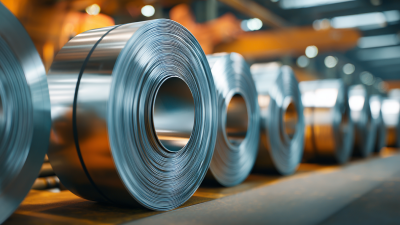
Cold-Rolled Coil, or CRC, is hot-rolled steel reduced at room temperature. This process improves thickness control, surface finish, and formability. CRC commonly serves automotive parts, appliances, furniture, and precision components. It is not simply “better steel.” Its value depends on grade, gauge, coating needs, and processing consistency.
The global supply chain begins with ironmaking and slab production. Mills then hot-roll, pickle, and cold-reduce the strip. Annealing and skin-pass rolling may follow. The finished coil can travel through ports, service centers, and regional processors before reaching a factory. World Steel Association data reported global crude steel production near 1.9 billion tonnes in 2023. However, crude steel volume does not show CRC availability. OECD’s Steel Outlook 2024 also highlighted persistent excess capacity and changing trade flows. UN Comtrade records can help compare import values, quantities, and supplier concentration, but customs data may use broad product classifications.
Tips: For steel coil wholesale, request Mill Test Certificates, chemical limits, yield strength, tensile strength, elongation, coil weight, and edge condition. Ask for recent inspection records. Confirm whether the quoted price includes slitting, inland freight, insurance, and port charges. Map two supply routes, not one. A low offer can hide longer lead times or unstable tolerances.
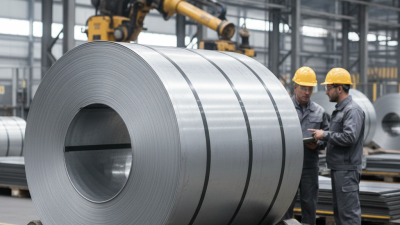
Experience matters during loading. Inspectors should photograph coil markings, packaging, rust protection, and damage before dispatch. Yet a spreadsheet can still lie. Forecasts are imperfect, especially when energy costs, freight rates, or trade measures change quickly. A practical sourcing plan therefore combines technical verification, landed-cost analysis, and regular supplier reviews.
How to Source CRC Steel Globally in 2026?
Grade selection should begin with the end use, not the supplier’s catalog. For stamped panels, compare DC01 under EN 10130, CS Type B under ASTM A1008, and SPCC under JIS G3141. Their chemistry, yield strength, elongation, and forming performance can differ. A high-quality steel coil manufacturer should provide the full mill test certificate, dimensional tolerances, surface finish, and oiling condition. Ask for thickness, width, coil weight, inner diameter, and edge condition. These details affect press setup and warehouse handling.
Quantity needs equal attention. The World Steel Association’s October 2024 outlook projected Global Steel demand at about 1.772 billion tonnes in 2025, with growth near 1.2%. That broad figure does not guarantee stable CRC availability in every region. Divide demand into trial, monthly, and annual volumes. A 50-tonne trial order may reveal surface defects that a 5,000-tonne contract could hide. Be careful here. A clean spreadsheet can still mislead.
Tips: Request three production samples, then test hardness, tensile strength, coating or oil coverage, and flatness. Record acceptable limits in the purchase specification. Confirm whether quantities mean net weight or gross weight. Also review shipment windows, inspection rights, and claims procedures. OECD steel-market analysis repeatedly highlights overcapacity and trade-flow volatility, so one source may be risky. I would keep a qualified second source, even when its price is slightly higher. That decision is not always comfortable.
How to Source CRC Steel Globally in 2026?
Identifying reliable cold-rolled coil suppliers requires more than comparing offer prices. In 2023, global crude steel production reached about 1.89 billion tonnes, according to the World Steel Association. This scale creates choice, but also uneven quality and delivery risks. The OECD Steel Outlook 2024 reported global excess capacity of approximately 561 million tonnes. Buyers should therefore examine each supplier’s actual production focus, not only its trading volume.
Compare suppliers using measurable details. Check steel grade, gauge tolerance, width range, surface finish, oiling method, and coil weight. Request recent mill test certificates and independent inspection records. For automotive or appliance applications, verify forming performance and surface quality. Also calculate landed cost, including freight, insurance, duties, port handling, and inland transport. A cheaper offer can become expensive after delays or rework. bulk hot-rolled steel may appear attractive, but it cannot automatically replace CRC where tight tolerances are required.
Tips: Build a supplier scorecard with quality, capacity, lead time, payment terms, and claims history. Ask for production photos, packing specifications, and a sample certificate. Review at least three quotations under identical technical terms. My practical mistake was comparing price before confirming tolerances. That reversed the decision later. Use current freight data and written validity periods, because market quotations can change within days. Geopolitical exposure also deserves attention, even when the product looks compliant on paper.
How to Source CRC Steel Globally in 2026?
Verifying supplier credentials, quality, and production capacity requires more than a polished website. A reliable supplier should provide a registered company name, operating address, ownership details, and verifiable export history. Request recent customer references from comparable industries. Check whether the stated production site matches the legal entity. Paperwork is not proof. Independent trade databases, factory audits, and video inspections can expose inconsistencies before payment discussions begin.
Quality verification should start with precise specifications, including grade, thickness tolerance, width, surface finish, coating requirements, and mechanical properties. Ask for recent mill test certificates linked to actual coil numbers. Request samples from the same production route, not unrelated stock. An accredited laboratory can test yield strength, tensile strength, elongation, dimensions, and surface defects. Photos help, but they cannot replace testing. I have seen attractive samples hide poor edge quality and unstable thickness.
Tips: Ask suppliers to explain their inspection process in practical terms. Confirm calibration records for gauges and testing equipment. Capacity needs context. A factory may advertise high annual output but have limited monthly availability. Request a production schedule, equipment list, current utilization, and contingency plan for maintenance or raw material delays. Verify whether the supplier controls rolling, annealing, and finishing internally. A transparent answer is valuable, even when it reveals limits. Do not rely on the largest quoted volume; match capacity to your delivery windows, quality tolerance, and order frequency.
Upstream crude steel production is a useful capacity indicator when screening potential cold-rolled coil suppliers. Production scale should be verified together with mill certificates, applicable standards, audit records, export history, and confirmed CRC rolling capacity.
Data: 2024 crude steel production by country, World Steel Association. Values are in million tonnes and indicate upstream steelmaking scale, not confirmed CRC production capacity.
Pricing begins with the right benchmark. World Steel Association’s World Steel in Figures 2025 recorded 1.88 billion tonnes of global crude steel production in 2024. That scale does not guarantee stable CRC prices. Regional demand, mill utilization, energy costs, and import duties still move quotations quickly. Ask each Hot-rolled steel coil supplier for a price basis, coating or pickling details, thickness tolerance, and quote validity. A low FOB price may become expensive after ocean freight, insurance, port handling, and inland delivery.
Incoterms must match operational control. Under FOB, the buyer manages main freight and insurance. CIF offers simpler budgeting, but the seller controls transport arrangements. Confirm the named port and risk-transfer point under ICC Incoterms 2020. UNCTAD’s Review of Maritime Transport 2024 highlighted continued exposure to rerouting and freight-capacity shocks. Lead times need similar discipline. Request separate dates for order confirmation, production, inspection, vessel booking, and arrival. Eight weeks is not always eight weeks.
Tips: Compare landed cost, not mill price. Use a shipment schedule with buffer days. For payment, consider a documentary letter of credit for new suppliers, then negotiate partial deposits or open-account terms after proven performance. Require inspection records and packing photos before balance payment. I would still challenge my own forecast. Freight can change after signing. Temperature, rust prevention, and local storage are easy to underestimate.
How to Source CRC Steel Globally in 2026?
Global CRC steel sourcing in 2026 requires more than comparing coil prices. Compliance begins before the purchase order. Verify the supplier’s legal registration, production capacity, quality system, and export history. Request heat numbers, mill test certificates, chemical analysis, and dimensional tolerances. Confirm that documents match the actual coils. Small mismatches can delay customs clearance.
Check the destination country’s tariff code, origin rules, labeling requirements, and product standards. Do not assume one certificate works everywhere. A customs broker should review the commercial invoice, packing list, bill of lading, and certificate of origin before loading. Trade restrictions and import measures can change quickly. Keep written evidence of every check.
Shipping creates different risks. CRC coils need dry storage, edge protection, secure lashing, and suitable moisture control. A wet container can leave rust marks before arrival. Confirm coil weight, eye orientation, packaging photos, and loading records. Agree clearly on Incoterms, insurance, inspection rights, and responsibility for port charges. Build a delivery buffer around transshipment ports and seasonal congestion.
It rarely works perfectly.
I still recommend a pre-shipment inspection, even after reviewing trusted documents. Inspectors can check surface condition, coil identification, packing, and quantity. Use a realistic backup plan for vessel delays, customs questions, or rejected paperwork. The cheapest offer may become expensive after demurrage, rework, and production downtime. Keep communication records, but question assumptions when schedules look unusually optimistic.
| Risk / Data Dimension | 2026 Planning Data | Why It Matters for CRC Steel | Recommended Control | Primary Evidence / Regulatory Anchor |
|---|---|---|---|---|
| Product classification | Cold-rolled non-alloy steel in coils or sheets is commonly classified under HS heading 7209 when the product is flat-rolled, cold-reduced, non-clad, and at least 600 mm wide. | A wrong HS code can change duty, quota, trade-remedy exposure, licensing requirements, and customs documentation. | Confirm the full destination-country tariff subheading before quotation. Match thickness, width, coating, grade, and edge condition to the classification ruling. | Destination customs tariff, binding tariff information, product specification, and commercial invoice. |
| Typical CRC specification | Common purchasing parameters include thickness approximately 0.30–3.00 mm, width approximately 600–2,000 mm, yield strength, tensile strength, elongation, surface finish, oiling, flatness, and coil weight. | Small differences in grade or dimensional tolerance can make the material unsuitable for stamping, forming, automotive, appliance, or construction applications. | Issue a detailed technical specification and approve a pre-production sample or mill test certificate before mass shipment. | Purchase specification, applicable ASTM, EN, JIS, or equivalent standard, and mill test certificate. |
| Origin determination | Origin is generally linked to where the steel undergoes the legally defined substantial transformation; slitting, repacking, or minor processing may not change origin. | Origin affects preferential duty, trade remedies, quotas, sanctions screening, carbon reporting, and marking requirements. | Obtain a signed origin declaration and retain production records showing melt, rolling, and processing locations. | Non-preferential origin rules, free-trade agreement rules where applicable, certificate of origin, and mill records. |
| Carbon-border compliance | The European Union’s CBAM definitive period begins in 2026 for covered goods, including iron and steel products. Importers must manage embedded-emissions data and applicable certificate obligations. | Missing emissions data may increase compliance cost, delay customs processes, or require conservative default values. | Collect installation-level production data, direct emissions information, electricity data where required, and verification records before shipment. | European Union CBAM legislation, implementing rules, customs declaration requirements, and authorized declarant procedures. |
| Trade remedies and quotas | Steel imports may be subject to anti-dumping, countervailing, safeguard, tariff-rate quota, or national-security measures. Rates and quota balances vary by destination, product code, origin, and shipment date. | The base purchase price may be commercially attractive but become uncompetitive after additional duties or quota restrictions. | Perform a shipment-specific trade-remedy check and confirm quota availability before signing the sales contract. | Official customs tariff, trade-remedy notices, quota administration portal, and customs broker classification review. |
| Supplier qualification | A robust qualification file should include legal registration, production capability, quality-system evidence, export history, ownership information, sanctions screening, and financial-risk checks. | Capacity claims, subcontracting, inconsistent quality, and payment fraud can create delivery and financial losses. | Use at least two qualified supply sources and conduct document verification, sample testing, and pre-shipment inspection. | Business registration records, audit reports, quality certificates, bank verification, and independent inspection report. |
| Indicative production lead time | Typical planning range: 3–8 weeks after confirmed specification, payment terms, and production slot. Custom grades, narrow tolerances, or peak demand may require longer. | Lead time can increase when raw material allocation, rolling schedules, inspection, or port congestion changes. | Separate quoted production time from transport time and include a contractual latest shipment date. | Approved production schedule, purchase order, inspection plan, and shipment-readiness notice. |
| Ocean freight planning | Indicative port-to-port ocean transit is commonly about 20–45 days on major long-haul routes, excluding inland transport, transshipment, customs, and terminal dwell time. | Weather, port congestion, blank sailings, vessel schedule changes, canal restrictions, and security diversions can extend delivery. | Use a route-specific sailing plan, obtain schedule reliability data, and add a 7–14 day contingency for long-haul shipments. | Carrier booking confirmation, bill of lading, vessel schedule, port notices, and cargo-tracking records. |
| Cargo weight and loading | Steel Coils are dense cargo. A standard container payload is often limited by legal gross weight, axle limits, container rating, and carrier policy rather than cubic capacity. | Overweight cargo may be refused, reworked, rolled to another sailing, or subject to additional handling costs. | Confirm coil weight, eye orientation, blocking, lashing, center of gravity, verified gross mass, and destination road limits. | SOLAS verified gross mass requirements, carrier loading rules, packing declaration, and transport regulations. |
| Packaging and corrosion | CRC requires protection against seawater, condensation, abrasion, edge damage, and coil movement. Packaging may include waterproof paper, steel or fiber wrapping, edge protection, skids, and desiccant. | Improper packaging can cause wet-storage stains, rust, telescoping, coil collapse, and claims that are difficult to recover. | Specify packaging by transport mode and climate. Photograph cargo before loading, after loading, and at destination discharge. | Packaging specification, loading photographs, container condition report, and marine-cargo insurance policy. |
| Customs documentation | Core documents normally include commercial invoice, packing list, bill of lading, customs entry data, certificate or declaration of origin, mill test certificate, and any required import permit. | Inconsistent descriptions, weights, values, grades, or origin statements can trigger examinations and clearance delays. | Use one controlled data sheet for product description, HS code, net weight, gross weight, quantity, value, origin, and consignee information. | Customs declaration, invoice, packing list, transport document, origin evidence, and product certificate. |
| Customs clearance exposure | For a complete and consistent file, routine clearance may take approximately 1–5 business days; inspections, valuation disputes, quota issues, or missing permits can extend this materially. | Every additional customs day can create demurrage, detention, storage, production stoppage, or missed customer delivery. | Pre-clear documents before vessel arrival and obtain written responsibility rules for duties, inspections, storage, and demurrage. | Customs broker checklist, pre-arrival filing, customs release notice, and terminal free-time terms. |
| Incoterms and cost ownership | FCA, FOB, CFR, CIF, DAP, and DDP allocate transport, risk, insurance, customs, and duty responsibilities differently. Incoterms do not determine ownership transfer or payment terms. | Unclear terms can leave the buyer exposed to unexpected freight, insurance, customs, tax, or terminal charges. | State the named place, version of Incoterms, customs party, insurance scope, free time, and cost allocation in the contract. | ICC Incoterms rules, purchase contract, freight quotation, insurance certificate, and customs authorization. |
| Payment and financial risk | Common structures include a deposit with balance against documents, documentary credit, open account for approved counterparties, or staged payment linked to inspection milestones. | Large deposits, currency movements, forged bank instructions, and document discrepancies can create direct financial exposure. | Verify bank details through an independent channel, cap prepayment, use dual approval, and link final payment to inspection and document release. | Signed contract, bank verification record, documentary credit terms, inspection report, and payment approval log. |
| Quality acceptance | Acceptance should cover thickness, width, length, flatness, surface quality, mechanical properties, coil weight, welds, oiling, edge condition, and quantity tolerance. | Quality disputes are harder to resolve after material is slit, stamped, coated, or incorporated into finished goods. | Define measurable tolerances, sampling frequency, testing method, claim period, replacement rules, and independent inspection rights. | Technical standard, approved inspection plan, mill test certificate, third-party inspection, and receiving inspection report. |
| Delivery performance target | For international sourcing, a practical planning target is 90–95% on-time delivery to the agreed delivery window, with a separate target for quality acceptance and document accuracy. | A shipment can be physically on time but still unusable if documents, dimensions, or customs data are incorrect. | Track production readiness, vessel departure, arrival, customs release, final delivery, and accepted quantity as separate milestones. | Supplier scorecard, transport milestones, customs release record, receiving report, and corrective-action log. |
| Landed-cost structure | Total landed cost should include steel price, processing, packaging, inland freight, ocean freight, insurance, duties, taxes, customs brokerage, terminal charges, storage, demurrage, financing, inspection, and carbon-related compliance cost where applicable. | Comparing only the mill price can hide 10% or more of the final delivered-cost variation on long-distance shipments. | Build a route-specific landed-cost model with low, base, and high scenarios for freight, duty, exchange rate, delay, and inspection cost. | Supplier quotation, freight offer, customs tariff, tax assessment, insurance quote, and logistics invoices. |
| Supply continuity | A dual-source strategy should cover different production sites or geographic corridors where practical, while maintaining compatible grades, dimensions, and approval status. | Port disruption, export restrictions, energy shortages, sanctions, labor actions, or mill outages can interrupt a single-source plan. | Set minimum safety stock according to consumption and replenishment time; pre-approve an alternate material and emergency freight procedure. | Business-continuity plan, approved-vendor list, inventory policy, alternate-grade approval, and risk-monitoring register. |
| Recommended sourcing decision gate | Proceed only when product specification, supplier qualification, tariff classification, origin, trade-remedy exposure, emissions data, logistics route, landed cost, inspection plan, and contractual remedies are documented. | A formal gate prevents a low purchase price from masking regulatory, logistics, quality, or delivery exposure. | Use a weighted approval score: compliance 25%, quality 20%, landed cost 20%, delivery reliability 15%, capacity 10%, financial and geopolitical risk 10%. | Internal sourcing approval, compliance checklist, supplier scorecard, risk register, and signed commercial contract. |
China cold-rolled steel coil suppliers are increasingly focusing on matte finishes and deep-drawing performance to meet the needs of automotive, appliance, construction, and general metal-forming industries. Industry insights associated with the World Steel Association and CRU highlight the importance of consistent surface quality, formability, and process reliability in today’s competitive steel market. Cold-rolled matte finish coils are manufactured with precision work rolls featuring EDM-textured surfaces, producing a uniform, non-directional grain with a roughness of Ra 1.8–2.5 µm. Their controlled surface texture, typically measuring 60–85 GU in gloss, can improve paint adhesion by approximately 40% compared with bright finishes, supporting durable and attractive coating results.
Available in JIS G3141 SPCC and SPCE grades, these coils are carefully processed through batch annealing at around 710°C. This controlled treatment helps achieve r-values of 1.4–1.8, providing excellent resistance to cracking during deep drawing and complex forming operations. The material is suitable for components requiring smooth contours, stable dimensions, and dependable production efficiency. As an experienced Chinese supplier and factory, we provide consistent coil quality, precise surface control, and reliable specifications for customers seeking matte-finish steel with strong deep-drawing capability.
Start with the finished product, not the supplier’s catalog. Stamped panels may require different forming performance. Compare chemistry, yield strength, elongation, and surface quality. A suitable grade reduces cracking during pressing.
Request thickness, width, coil weight, inner diameter, and edge condition. Also confirm surface finish and oiling condition. These details affect press settings and warehouse handling. Small omissions can create costly surprises.
Order three production samples when possible. Test hardness, tensile strength, flatness, and oil coverage. Record acceptable limits in the purchase specification. A 50-tonne trial may reveal defects early. That is safer.
Divide demand into trial, monthly, and annual volumes. Confirm whether quoted quantities mean net or gross weight. A large contract may hide problems found in smaller batches. I would avoid trusting one clean spreadsheet completely.
Use identical technical requirements for every quotation. Compare quality, capacity, lead time, payment terms, and claims history. Calculate freight, insurance, duties, port charges, and inland delivery. A lower price may become expensive after rework.
Request recent mill test certificates and chemical analysis. Check heat numbers and dimensional tolerances. Ask for packing specifications, production photos, and inspection records. Documents must match the actual coils. Paperwork alone is not proof.
Coils need dry storage, edge protection, secure lashing, and moisture control. Confirm coil weight, eye orientation, packaging photos, and loading records. A wet container can leave rust marks before arrival. That damage is easy to underestimate.
Verify tariff codes, origin rules, labeling requirements, and destination standards. Ask a customs broker to review documents before loading. Include the invoice, packing list, transport document, and origin certificate. Build extra time around transshipment ports. Schedules are sometimes too optimistic.
Sourcing Crc Steel globally in 2026 requires a structured approach that begins with understanding the material, its manufacturing process, common grades, surface finishes, dimensions, and intended applications. Buyers should define technical specifications and required quantities before comparing international suppliers. A clear purchasing brief helps ensure that quotations are based on consistent requirements and makes it easier to evaluate quality, production capacity, certifications, inspection procedures, and supply reliability.
Commercial evaluation should cover the full delivered cost, including unit pricing, packaging, freight, insurance, duties, and other applicable charges. Buyers should also compare Incoterms, production lead times, payment conditions, and possible order flexibility. Careful planning is essential for managing compliance, documentation, shipping schedules, customs clearance, and delivery risks. By verifying supplier credentials, requesting representative samples or test reports, and establishing clear quality and communication procedures, companies can build a more dependable international sourcing strategy for Crc Steel while reducing delays, unexpected costs, and specification disputes.