In today’s ever-changing world of global trade, Steel Exports really play a huge role in shaping economies and driving industrial growth. As countries work to improve their infrastructure and boost manufacturing, the demand for top-quality steel just keeps climbing. This guide is all about highlighting the top ten countries that excel in exporting steel — looking at what makes them stand out and why they’re so successful on the world stage.
From well-established industrial giants to newer emerging markets, a bunch of countries have stepped up as strong contenders in the steel export game. Things like how much raw material they have, their tech levels, and their trade policies all factor into how well they do. As we dig into the details, I’ll share some interesting insights into these leading exporters and what gives them a bit of an edge against the competition. Ultimately, it’s a reminder of how crucial steel is in modern development and global trade — you really can’t overstate its role.
Top 10 Countries Leading in Global Steel Exports: An Overview
The Global Steel market is a dynamic landscape, with specific countries emerging as leaders in steel exports. According to theWorld Steel Association, the top five countries dominating the steel export sector include China, Japan, India, South Korea, and Germany. Collectively, these nations account for a significant portion of the world's total steel exports, showcasing their advanced production capabilities and robust manufacturing infrastructures. For instance, China alone contributed nearly 40% of global steel production in 2022, illustrating its crucial role in the international market.
One key factor contributing to these countries' success in steel exports is their investment in modern technology and sustainable practices. The use of advanced steel-making processes and renewable energy sources not only enhances productivity but also meets the growing global demand for environmentally responsible manufacturing. For instance, Japan has been leading the way in developing electric arc furnace technology, which significantly reduces carbon emissions during steel production.
Tips: When considering investment opportunities in the steel sector, keep an eye on emerging markets that may benefit from increased industrialization and infrastructure development. Countries like India and Vietnam are gradually strengthening their manufacturing bases, which can lead to potential growth in steel exports in the coming years. Furthermore, monitoring geopolitical trends and trade policies can provide critical insights into market shifts that may impact import and export dynamics.
Current Global Steel Trade Statistics: Key Insights and Figures
The current landscape of global steel trade reveals significant insights and figures that can help industries and investors navigate this vital sector. As of 2023, the global steel market is experiencing fluctuations driven by various factors, including economic recovery, supply chain disruptions, and the evolving demand for green technologies. Major players in steel exports, such as China, India, and Japan, continue to dominate due to their robust production capacities and advanced technologies. Understanding these trends is essential for stakeholders aiming to leverage opportunities in the steel market.
Tips for those involved in steel trade include staying informed about international trade policies and tariffs that could impact pricing and supply. It's also crucial to monitor market demand shifts, particularly in emerging economies that are ramping up infrastructure projects. Engaging in strategic partnerships and collaborations can provide competitive advantages, helping businesses mitigate risks associated with market volatility.
Furthermore, adopting sustainable practices in steel production is becoming increasingly important as the world shifts towards environmentally friendly solutions. Companies focused on innovation and sustainability can enhance their market position while aligning with global trends, making them more attractive to consumers and investors alike.
Factors Influencing Steel Export Performance by Country
The performance of steel exports varies significantly among countries, influenced by a myriad of factors. One primary consideration is the availability of natural resources, particularly iron ore and coal. Countries rich in these resources often exhibit a competitive advantage in producing and exporting steel. For instance, nations with large mines can maintain lower production costs, enabling them to price their steel competitively in the global market.
Another crucial factor is governmental policies and trade agreements. Countries that foster a conducive environment for steel production through favorable regulations, subsidies, and tax incentives tend to perform better in export markets. Additionally, favorable trade agreements can reduce tariffs and barriers, making it easier for exporting nations to access new markets.
Moreover, investment in technology and innovation can enhance production efficiency and product quality, further boosting a country's steel export performance. These dynamics illustrate how a combination of natural resources, governmental support, and technological advancement shapes the steel export landscape globally.
In-depth Profiles of the Leading Steel Exporters
When examining the landscape of steel exports, several countries stand out for their production capabilities, strategic port access, and favorable trade agreements. This guide delves into the profiles of these leading steel exporters, each with unique strengths contributing to their prominence in the global market. For instance, some countries leverage advanced technology and efficient production processes to create high-quality steel products, making them preferred partners for many importers worldwide.
Tips: When considering engaging with steel exporters, always evaluate their production capacity and quality certifications. Understanding their supply chain logistics can also provide insight into their reliability and ability to meet demand.
In addition to production strengths, other factors such as political stability, economic policies, and environmental regulations play significant roles in shaping the export landscape. Countries that actively foster trade relationships through bilateral agreements often excel, as they create a conducive environment for business. Exploring local partnerships and understanding the market's dynamics will further enhance import decisions for businesses looking to source steel.
Tips: Researching industry reports and engaging with local trade associations can help you stay informed about market trends and potential shifts in the steel export arena. This proactive approach can significantly benefit your sourcing strategy.
Technological Advances Shaping the Steel Export Industry
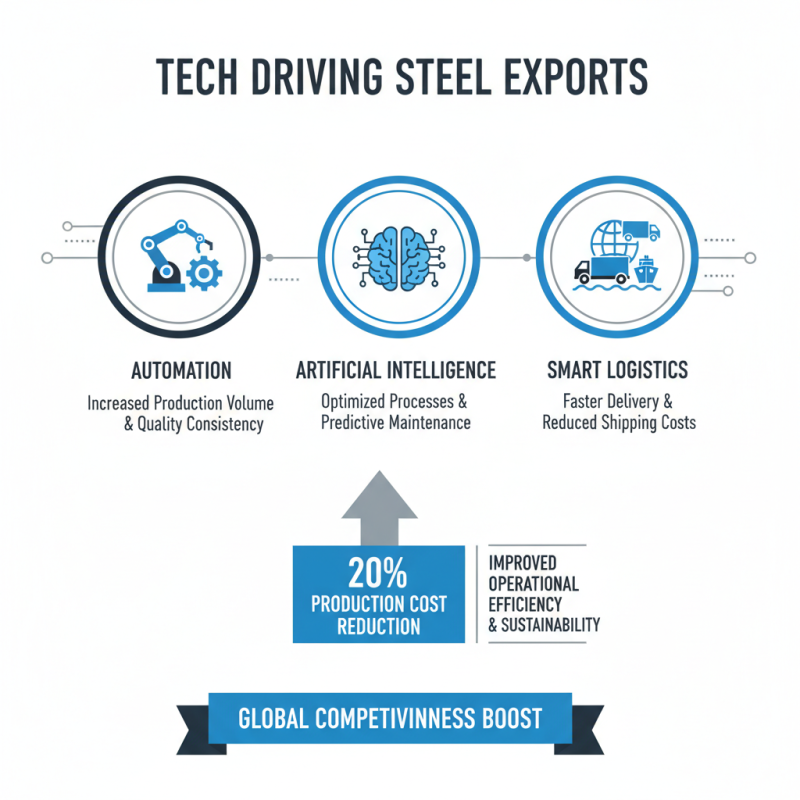
Technological advancements are playing a pivotal role in shaping the steel export industry, driving efficiency and sustainability in production processes. Recent reports indicate that innovations such as automation, artificial intelligence, and smart logistics systems have significantly improved operational efficiency, reducing production costs by up to 20% in some regions. For instance, data from industry experts show that automated factories are not only capable of producing higher volumes of steel but also maintaining quality consistency, which is critical in meeting international standards and customer demands.
Moreover, the adoption of environmentally friendly technologies has transformed the sector, with many countries investing in electric arc furnaces and alternative materials that minimize carbon emissions. According to a report by the World Steel Association, these technologies can reduce greenhouse gas emissions by over 50% compared to traditional methods. This shift not only addresses environmental regulations but also appeals to a growing market of consumers and companies prioritizing sustainability.
Tips: For steel exporters looking to thrive in this evolving landscape, investing in smart technologies and sustainability initiatives can enhance competitiveness. Regularly updating technical capabilities and staying informed about global standards will ensure compliance and open new markets. Engaging in collaborative innovations, such as partnerships with tech firms, can also lead to breakthroughs that propel operational success in the steel export industry.
Impact of Trade Policies on Steel Export Success
Trade policies play a crucial role in shaping the landscape of steel exports, influencing not only the volume of steel traded but also the global competitive dynamics. According to the World Steel Association, in 2022, global steel exports reached approximately 150 million metric tons, with countries that adopted favorable trade policies seeing significant growth in their export volumes. Tariffs, quotas, and trade agreements are significant factors that determine the ease with which countries can access foreign markets. For instance, countries that engage in free trade agreements are better positioned to increase their export capacities by reducing tariffs and eliminating barriers.
It is also noteworthy that countries with strong domestic steel industries often implement protective policies to shield their markets from foreign competition. This can lead to retaliatory measures from other nations, which could ultimately impact export opportunities. In 2021, data from the International Trade Administration indicated that countries like India and Russia have leveraged their trade policies to enhance their presence in international markets, capitalizing on lower export tariffs that encourage foreign purchases. Maintaining a delicate balance between protectionism and open trade is essential for countries aiming to succeed in the steel export market.
Tips: To navigate the complexities of international steel trade, exporters should stay informed about changing trade policies and regulatory measures. Collaborating with trade associations can provide valuable insights into market trends and trade agreements. Additionally, developing flexible supply chains that can adapt to shifting tariffs will enhance competitiveness in the global market.
Future Trends in Steel Production and Export Markets
The global steel production landscape is undergoing significant transformations influenced by emerging market dynamics and technological advancements. According to the World Steel Association's 2022 report, global steel production is expected to rise, driven by increasing demand from developing regions, particularly in Asia and Africa. By 2030, it is projected that these regions will account for over 70% of global steel consumption, reflecting a shift in economic power and industrial development.
Moreover, sustainability has become a crucial factor shaping the future of steel production and export markets. The push towards lower carbon emissions has led to innovations in steelmaking processes. The International Energy Agency (IEA) estimates that in the coming decade, green hydrogen could play a pivotal role in steel production, potentially reducing traditional carbon emissions by up to 30% when fully implemented. This shift not only addresses environmental concerns but also opens new avenues for countries investing in innovative steel technologies and sustainable practices.
As countries adapt to these trends, the demand for high-quality steel products is likely to rise, with a growing emphasis on recycling and circular economies. The Global Steel Innovations Forum predicts that the integration of digital technologies, such as artificial intelligence and the Internet of Things, will enhance operational efficiencies and enable more refined product offerings, positioning forward-thinking nations favorably in the global export market.
Innovative Applications and Benefits of Cold-Rolled Steel Coil with Matt Finish in Modern Industries
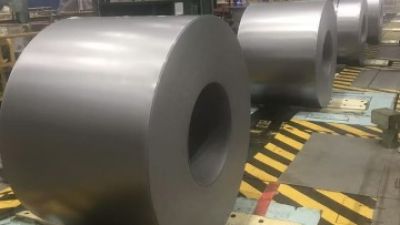
The innovative application of cold-rolled steel coils with a matte finish is revolutionizing various modern industries by providing enhanced functionality and performance. These coils are produced using advanced work rolls equipped with EDM-textured surfaces, achieving a surface roughness of Ra 1.8–2.5 µm. This specific texture results in a uniform, non-directional grain that is particularly beneficial for aesthetic and functional applications. The matte surface finish, characterized by gloss units ranging from 60 to 85 GU, significantly improves paint adhesion by up to 40% compared to traditional Bright Finishes. This enhancement is crucial for industries where surface coatings are a vital component of the overall product quality.
Moreover, the mechanical properties of these cold-rolled coils, such as the r-values, are finely tuned through batch annealing at 710°C. This process ensures that the r-values fall within an optimal range of 1.4 to 1.8, making these materials especially suitable for deep-drawn components used in automotive and appliance manufacturing. The uniformity and precision of these cold-rolled matt finish coils position them as a preferred choice in applications demanding both durability and excellent surface treatment compatibility. With these advanced properties, the matte finish coils contribute significantly to the efficiency and quality of production processes across various sectors, paving the way for further innovations in steel applications.
FAQS
: The top countries leading in global steel exports include China, Japan, India, South Korea, and Germany.
China contributed nearly 40% of global steel production in 2022, underscoring its crucial role in the international market.
Significant factors include investment in modern technology, sustainable practices, advanced steel-making processes, and renewable energy sources.
Trade policies such as tariffs, quotas, and trade agreements greatly influence the volume of steel traded by facilitating or hindering access to foreign markets.
Global steel production is projected to rise, particularly due to increasing demand from developing regions in Asia and Africa, which are expected to account for over 70% of global steel consumption by 2030.
Sustainability is increasingly important, with innovations aimed at reducing carbon emissions, such as the potential use of green hydrogen in steel production.
Countries can adapt by investing in innovative steel technologies, focusing on recycling and circular economies, and embracing digital technologies to improve operational efficiencies.
Exporters should stay informed about changing trade policies, collaborate with trade associations, and develop flexible supply chains to adapt to shifting tariffs.
Emerging markets like India and Vietnam are strengthening their manufacturing bases, which could lead to growth in their steel exports in the coming years.
The integration of digital technologies, such as AI and IoT, is expected to enhance operational efficiencies and allow for more refined product offerings in the global export market.
Conclusion
The article "10 Best Countries for Steel Export: A Comprehensive Guide" provides a thorough examination of the leading nations in global steel exports. It begins with an overview of the top 10 countries, highlighting their respective market shares and contributions to international trade. Key insights and figures reveal current global steel trade statistics, emphasizing trends that influence export performance.
Additionally, the article delves into the factors shaping the steel export landscape, including technological advancements and the impact of trade policies. In-depth profiles of the leading steel exporters offer a closer look at their strategies and challenges. Finally, the guide discusses future trends in steel production and export markets, providing a valuable resource for understanding the dynamics of the steel export industry.