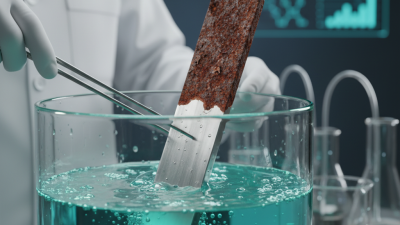
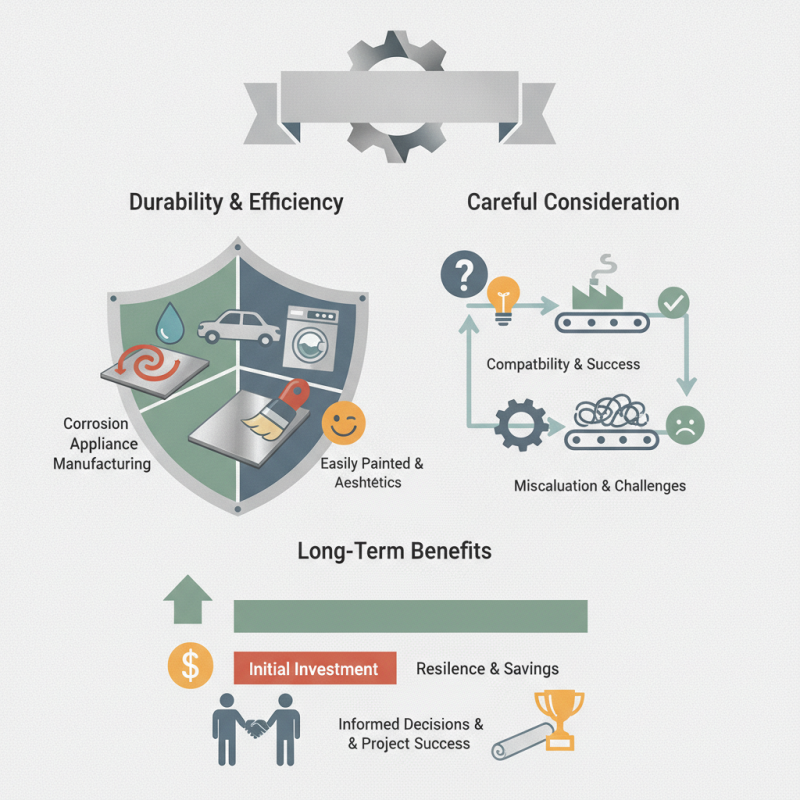
When you're picking out materials for a construction or manufacturing project, it's usually all about durability and efficiency, right? One option that really stands out is Galvannealed Steel Sheet. Basically, it’s coated with zinc and then heat-treated, which gives it pretty solid resistance against corrosion. Companies like XYZ Steel Solutions often recommend it for all kinds of uses — whether it’s in cars or appliances.
Now, choosing Galvannealed Steel Sheet might seem pretty straightforward at first glance, but there's more to it. It’s actually pretty paintable, which helps with making things look good and can even cut down on extra coatings. But if you're not careful about whether it fits with your specific processes, you might run into unexpected hiccups — trust me, some folks have been caught off guard by issues on the production line because of this.
It’s also worth thinking about the long-term perks. Yes, it might cost a bit more upfront, but honestly, its durability often saves you money in the long run. Making informed choices, especially by listening to expert advice, can really make the difference between a project that’s just okay and one that’s a total success. So, if you’re serious about quality and performance, going with Galvannealed Steel Sheet might just be the smart move for your next project.
Overview of Galvannealed Steel Sheet and Its Uses
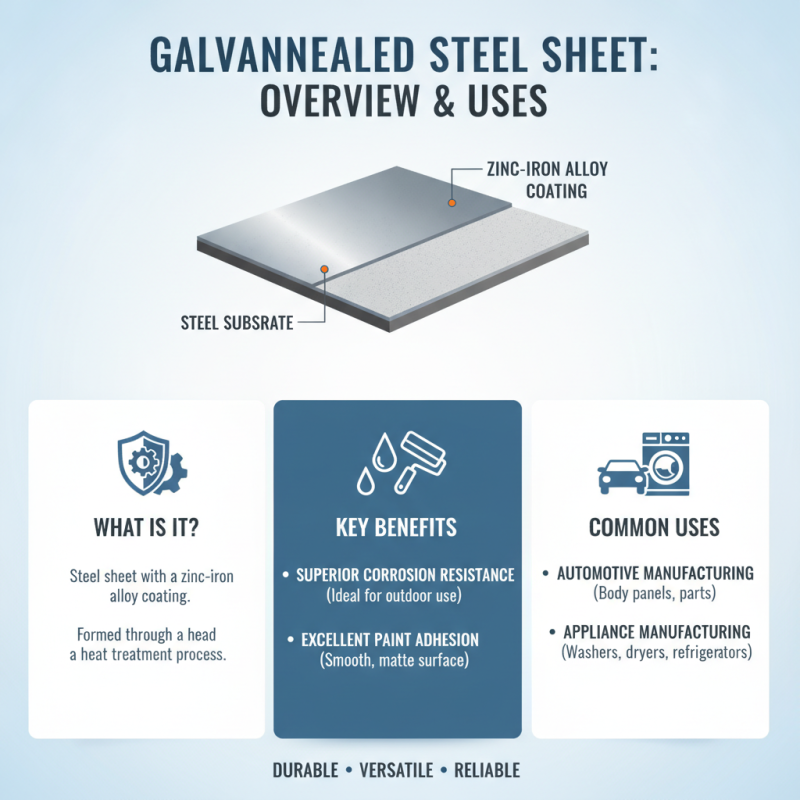
Galvannealed steel sheet is a popular choice in various industries. It combines the benefits of a galvanized coating with a unique surface finish. This coating provides superior corrosion resistance. Thus, it is ideal for outdoor applications. The steel sheet's smooth surface allows for excellent paint adhesion. This feature makes it suitable for automotive and appliance manufacturing.
In construction, Galvannealed Steel Sheets are often used for siding and roofing. Their resilience against weathering extends the life of the structures. The sheets can also be easily formed and fabricated. This flexibility makes them a preferred material for many projects. Yet, manufacturers must consider the cost. Sometimes, higher prices can lead to budget constraints.
Quality control is essential when working with these materials. Variations in coating thickness may affect performance. Therefore, close inspection during production is necessary. This can be a challenge, as not all suppliers maintain the same standards. Users should also be aware of the environmental impacts of steel production. Responsible sourcing can mitigate some of these issues. Overall, while galvannealed steel sheet has many advantages, careful consideration is needed.
Key Benefits of Using Galvannealed Steel in Construction Projects
Galvannealed steel sheet has emerged as a compelling choice for construction projects. Its unique properties combine the benefits of galvanization with the versatility of steel. This material exhibits excellent corrosion resistance, crucial for structures exposed to varying weather conditions. Reports indicate that galvanized steel can last up to 50 years when appropriately maintained, significantly reducing the need for replacements and repairs.
Another key advantage is its superior paintability. The galvannealed surface facilitates better adhesion for paints and coatings. This leads to an extended life cycle of finished surfaces, enhancing aesthetic appeal. According to industry data, structures using galvannealed steel show a 40% improvement in maintenance intervals compared to non-galvanized alternatives. Projects utilizing this material also benefit from lower long-term costs due to reduced upkeep, making it a wise financial choice.
While the advantages are clear, it is essential to consider the initial cost of galvannealed steel. Some projects may find the upfront investment to be a hurdle. Careful evaluation of project budgets is necessary to fully capitalize on the long-term savings associated with this material. Choosing the right application for galvannealed steel requires experience and expertise, ensuring it aligns with project goals and environmental conditions.
Comparative Analysis: Galvannealed vs. Traditional Steel Sheets
When considering materials for your project, Galvannealed Steel Sheets stand out. This type of steel combines the benefits of galvanization and annealing. Compared to traditional steel sheets, Galvannealed Steel Sheets offer better formability and corrosion resistance. This makes them ideal for applications that require durable yet flexible materials.
Traditional steel sheets can corrode easily, leading to potential failures in harsh environments. They often require additional coatings or treatments. In contrast, Galvannealed Steel Sheets eliminate the need for extensive surface protection. They come ready for painting or welding, saving you time and money during production. However, it's essential to acknowledge that not every project may benefit from their use.
Cost can also be a factor. Galvannealed Steel Sheets might have a higher upfront price. Yet, their longevity can lead to cost savings in the long run. Therefore, weigh the initial investment against the benefits they provide. Understanding these differences between Galvannealed and traditional steel sheets will guide you in making informed decisions for your next project.
Applications of Galvannealed Steel in Automotive and Manufacturing
Galvannealed steel is increasingly popular in automotive and manufacturing sectors. This type of steel combines corrosion resistance with excellent paint adhesion. According to a report by the Steel Market Development Institute, galvannealed steel comprises about 35% of all automotive Sheet Steel used today.
In automotive applications, galvannealed steel is vital for body panels and structural components. It helps reduce the weight of vehicles while maintaining strength. The average weight savings can reach up to 20% compared to traditional steel. However, manufacturers face challenges in achieving uniform coating thickness, which can affect performance in harsh environments. Thin areas may rust easily, leading to premature failures.
In manufacturing, galvannealed steel’s smooth surface allows for better paint finishes. Paints adhere more effectively, improving durability. Studies show that the coating can withstand up to 1,000 hours of salt spray testing when properly applied, enhancing longevity. Yet, improper surface preparation can compromise these benefits. Consequently, ensuring quality in the manufacturing process remains a critical factor for success.
Environmental Impact and Sustainability of Galvannealed Steel
Galvannealed steel is gaining attention for its sustainability. The galvannealing process enhances corrosion resistance. This means products last longer, reducing the need for replacements. Manufacturing these steel sheets requires less energy than traditional methods. This lowers overall carbon emissions, contributing to a healthier planet.
Choosing Galvannealed Steel Products can be an excellent decision for eco-conscious projects. However, always consider sourcing. Make sure your supplier maintains sustainable practices. This can amplify the environmental benefits of your project. Another critical point is recycling. Galvannealed steel is 100% recyclable, promoting a circular economy.
One tip is to evaluate the lifecycle of the steel you select. Assess its environmental impact from production to disposal. Remember, every project has a footprint. Aim to minimize it. Transparency in steel production can also aid in making informed choices. The long-term benefits of using Galvannealed Steel Products depend on conscious decisions today.
Cost Considerations for Using Galvannealed Steel Sheets
When considering materials for your next project, cost is a major factor. Galvannealed Steel offers unique benefits that could influence your budget. This type of steel sheet combines the advantages of galvanization with the ease of paint adhesion. While the initial investment might be higher, its longevity can save money in the long run. Reducing maintenance and replacements is essential for cost-effectiveness.
The production process of Galvannealed Steel involves a coating that is smoother than traditional galvanized sheets. This feature enhances its durability, making it ideal for various applications. However, potential drawbacks include the risk of corrosion if not properly maintained. It's crucial to evaluate whether the benefits outweigh these risks for your specific use case.
Project managers often weigh these costs against the potential performance of Galvannealed Steel. Evaluating the lifecycle costs rather than just upfront expenses may provide a clearer picture. Ultimately, success hinges on balancing immediate financial outlays with long-term savings. Understanding this can lead you to make a better-informed decision.
Future Trends and Innovations in Galvannealed Steel Technology
The future of galvannealed steel technology is taking shape as industries seek innovative materials. Galvannealed Steel Coil is leading the way due to its unique combination of corrosion resistance and formability. Studies show that the global galvannealed steel market is projected to grow at a CAGR of 4.5% from 2023 to 2030. This growth indicates strong demand across various sectors, including automotive and construction.
Recent advancements in production techniques are enhancing the performance of galvannealed steel. For instance, new coating technologies have improved adhesion properties, making the material even more appealing for manufacturers. However, concerns still exist regarding the consistency of coating quality, which can vary during the production process. Addressing these challenges will be vital for maintaining reliability in future applications.
Sustainability remains another important trend. The steel industry is under pressure to reduce its carbon footprint. Galvannealed solutions are being developed with recycled materials, aiming for a closed-loop production cycle. These efforts are crucial, yet the industry must navigate the balance between sustainability and the cost of raw materials. Such considerations will shape the innovation landscape for galvannealed steel moving forward.
Comparison of Galvannealed Steel Sheet Applications in Various Industries
Evaluating the Advantages of Corrosion-Resistant Cold-Hardened Steel Coil: Insights from Industry Reports on Durability and Cost Efficiency
Corrosion-resistant cold-hardened steel coils have emerged as a significant advancement in the manufacturing sector, combining superior durability with cost efficiency. According to industry reports, these coils are produced using cold reduction techniques between 50% and 95% draft on advanced Sendzimir mills. This method not only results in ultra-fine grain sizes, compliant with ASTM 10-12 specifications, but also enhances their mechanical properties through severe plastic deformation. As noted in recent studies, the strain-hardening mechanism of these coils elevates tensile strength to an impressive 1,200 MPa while achieving elongation rates of 3-8%.
These properties make cold-hardened steel coils particularly attractive for various applications where strength and resilience are paramount. The proprietary annealing cycles, conducted in H₂/N₂ atmospheres at temperatures ranging from 650°C to 750°C, further stabilize the microstructure of the material. This process ensures a hardness range of HRB 70-100, with tolerances of ±2 HRB, allowing for enhanced performance in demanding environments. The combination of these factors positions corrosion-resistant cold-hardened steel coils as a leading choice in many industrial applications, ultimately contributing to reduced maintenance costs and improved overall structural integrity.
Industry reports highlight that the utilization of these advanced materials not only meets stringent performance requirements but also offers long-term economic benefits, emphasizing the need for manufacturers to adopt innovative materials like cold-hardened steel coils to remain competitive. The assessment of durability based on rigorous testing underscores their viability as an essential material in today's industrial landscape.
FAQS
: Galvannealed steel combines galvanization with the versatility of steel. It is used widely in construction.
It has excellent corrosion resistance and superior paintability compared to other steel types.
Properly maintained galvanized steel can last up to 50 years, reducing replacements and repairs.
Better paint adhesion on galvannealed steel enhances the aesthetic appeal and extends the life of surfaces.
Yes, the initial cost can be higher, which may be a hurdle for some projects.
Its durability leads to lower maintenance costs over time, making it financially wise for many projects.
Not every project benefits from it; experience is needed to choose the right application wisely.
Galvannealed sheets offer better formability and corrosion resistance, eliminating the need for extra coatings.
They corrode easily, especially in harsh environments, which can lead to failures.
Evaluate both the initial costs and long-term benefits to make an informed choice.
Conclusion
Galvannealed Steel Sheet is a versatile material that offers numerous advantages for construction and manufacturing projects. Its key benefits include enhanced corrosion resistance, improved paint adhesion, and superior formability compared to traditional steel sheets. This makes it an ideal choice for a variety of applications, particularly in the automotive industry, where durability and performance are paramount.
Moreover, galvannealed steel is recognized for its environmental sustainability, as the production process is designed to minimize waste and reduce harmful emissions. While cost considerations are an essential factor, the long-term savings associated with its durability and maintenance requirements often make it a cost-effective choice. As technology advances, future trends in galvannealed steel will likely focus on further innovations to improve performance and sustainability, solidifying its position as a preferred material in various sectors.