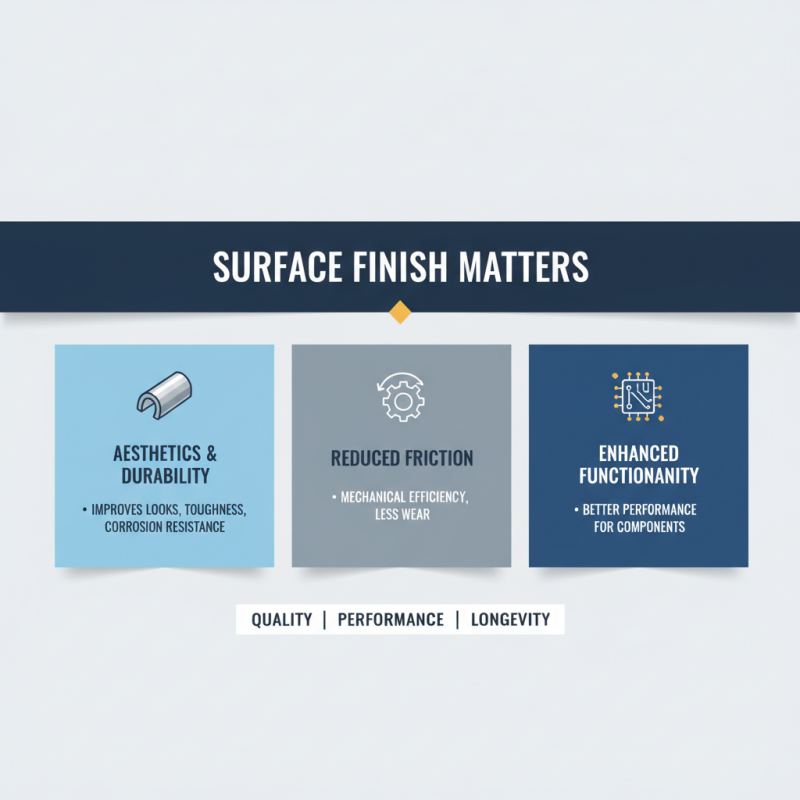
In the competitive world of manufacturing, you really can't ignore how important a high-quality surface finish is. A report from the American Society for Quality points out that products with smooth, well-finished surfaces don’t just look better—they also work better and last longer. As more industries like aerospace, auto, and medical devices push for precision parts, the need for advanced surface finishing techniques that meet tough standards is more critical than ever.
Recent research shows that parts with a high-quality surface finish tend to have less friction, better resistance to wear, and even last longer under stress. For example, a survey by the Manufacturing Institute found that up to 70% of production problems could actually be traced back to poor surface quality. That really highlights how crucial good surface finishing is for making reliable products and keeping operations running smoothly. As technology moves forward, adopting innovative methods like precision grinding, laser polishing, and electrodeposition will become pretty much essential for manufacturers who want to stay competitive and deliver top-notch products in today’s fast-paced market.
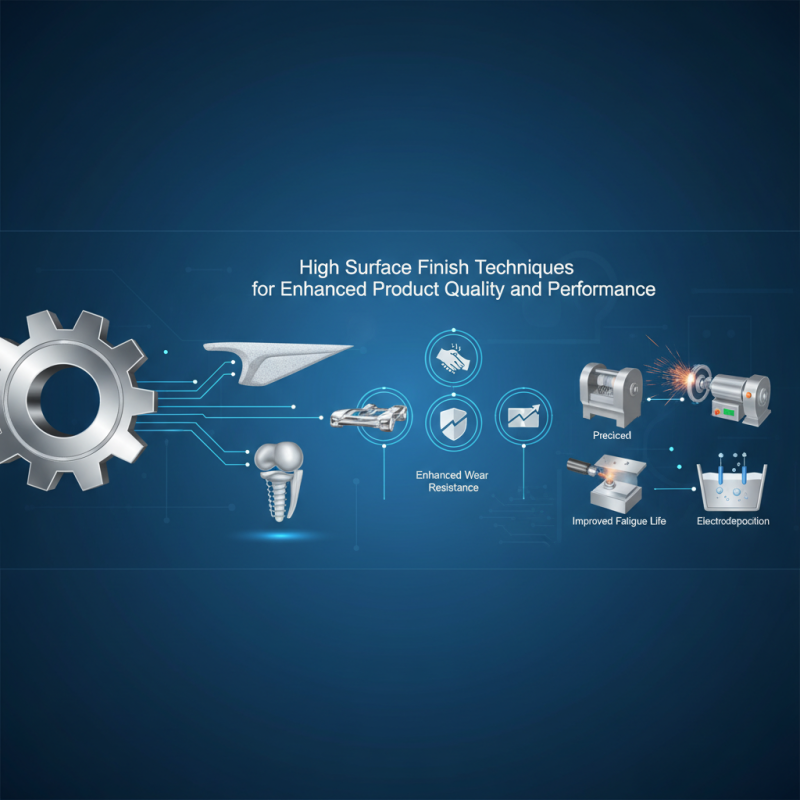
High Surface Finish techniques in manufacturing are crucial in determining the quality and performance of a product. These techniques enhance aesthetic appeal, improve mechanical properties, and ensure that components fit together more precisely. Methods such as grinding, polishing, and electroplating are commonly employed to achieve the desired surface finishes. Each technique has its own unique advantages, depending on the materials and the intended application of the finished product.
**Tips:** When selecting a surface finish technique, consider the end-use of the product. For high-tolerance applications, precision grinding may be necessary, while decorative items might benefit more from polishing. Always test surface finishes on a small scale before full implementation to ensure the desired results are achieved.
Additionally, advancements in technology have led to the development of innovative surface finish methods such as laser polishing and ultrasonication. These emerging techniques can significantly reduce production time while enhancing surface quality. Understanding which technique best suits your materials and requirements is essential for optimizing both product performance and manufacturing efficiency.
**Tips:** Keep an eye on industry trends and emerging technologies to stay ahead of the curve. Investing in proper training for your manufacturing team about these techniques can lead to improved output quality and operational productivity.
The surface finish of a product plays a critical role in determining its overall quality and performance. A high-quality surface finish can improve the aesthetic appeal of a product while also enhancing its durability, corrosion resistance, and functionality. For instance, smooth surfaces reduce friction, which is particularly important in mechanical components, ensuring they operate more efficiently and with less wear over time.
In addition, surface finish is crucial for products that require precise tolerances and fit. Poor surface quality can lead to issues such as leaks or misalignments, which can compromise the integrity of the product and lead to costly failures. Therefore, manufacturers must prioritize techniques that result in optimal surface finishes to meet the expectations of both the market and regulatory standards.
Tips for achieving a superior surface finish include selecting the right machining processes, such as grinding or polishing, that suit the material being worked on. Regular maintenance of machinery is equally important to avoid imperfections due to tool wear. Additionally, implementing quality control measures, such as surface roughness testing, can help ensure that the finished product meets the required specifications. By paying close attention to surface finish, manufacturers can significantly boost product quality and customer satisfaction.
Achieving high surface finish standards is paramount in various industries, particularly in manufacturing, aerospace, and automotive sectors where product quality and performance are critical. Common methods for enhancing surface finish include grinding, polishing, and advanced techniques such as laser polishing and electrochemical machining. According to a report from the International Journal of Advanced Manufacturing Technology, precision grinding can improve surface finishes to less than 0.1 micrometers, utilizing specialized abrasives and parametric control. This precision not only enhances aesthetic aspects but also significantly improves wear resistance and fatigue strength.
Polishing techniques, both mechanical and chemical, play a crucial role as well. Mechanical polishing, for instance, can yield surface roughness values down to Ra 0.01 micrometers. Meanwhile, advances in chemical polishing, which involve the selective dissolution of irregularities on the surface, have been shown to improve surface finish and reduce defects effectively. The Society of Manufacturing Engineers has reported that implementing these polishing methods can increase the lifespan of components by approximately 25%. These high standards are increasingly being adopted as industries move towards more robust and reliable product offerings, further driving demand for improved surface finish techniques.
The advancement in technology for surface finishing has led to significant improvements in product quality and performance across various industries. Techniques such as ultraprecision machining and advanced coating technologies allow manufacturers to achieve surface finishes that not only meet but exceed stringent quality standards. According to a report by the International Journal of Advanced Manufacturing Technology, utilizing ultrasonic machining can reduce surface roughness by up to 90%, thereby enhancing the functional performance of components in critical applications like aerospace and automotive.
Moreover, innovations in laser surface processing have introduced a new era of customization and efficiency. By applying laser ablation techniques, manufacturers can create complex surface textures that improve friction characteristics and wear resistance. A recent industry analysis indicated that the laser surface treatment market is projected to grow at a CAGR of 8.5%, driven by rising demands for higher performance in mechanical components. This technological progress not only contributes to the longevity of products but also plays a crucial role in sustainability efforts by minimizing material waste during the finishing process.
In summary, the pursuit of enhanced surface finishing techniques powered by cutting-edge technologies is redefining manufacturing standards, leading to superior product quality and operational efficiency. This shift not only meets the needs of modern industries but also opens new avenues for innovation in surface engineering.
Quality control in surface finishing processes is essential for ensuring the performance and durability of products across various industries. According to a report by the ASTM (American Society for Testing and Materials), up to 30% of production defects can be traced back to inadequate surface finishes. This statistic emphasizes the critical role of meticulous quality control measures throughout the surface finishing process. Techniques such as visual inspections, profilometry to measure surface roughness, and non-destructive testing methods can help identify imperfections before they affect the final product.
Tips: Implementing a robust verification process can significantly reduce defect rates. Regularly calibrating measurement instruments and conducting operator training ensures consistency in quality assessments and fosters a culture of excellence.
Additionally, advanced technologies like automated surface finish monitoring are becoming increasingly prevalent. These systems utilize real-time data analytics to assess surface quality during production, allowing for immediate adjustments that can enhance overall product quality. A recent study revealed that companies adopting such technologies saw a 15% reduction in production errors related to surface quality. By integrating these modern techniques with traditional quality control measures, manufacturers can achieve superior finishes that meet stringent industry standards while enhancing the reliability of their products.
Tips: Embrace technology by investing in smart monitoring systems that not only streamline inspections but also provide actionable insights into improving surface finishing processes.
In manufacturing, achieving a high surface finish is critical for product performance and aesthetic appeal. Various industries are turning to advanced surface finishing techniques, leading to remarkable case studies that highlight their effectiveness. For instance, a recent project in the aerospace sector implemented ultra-fine polishing techniques which significantly reduced friction in engine components. This not only enhanced the overall efficiency of the engines but also extended their operational lifespan, showcasing the tangible benefits of investing in high-quality surface finishes.
Another successful example comes from the medical device industry, where a company adopted electropolishing for its Stainless Steel implants. This process improved the surface smoothness, reducing the risk of bacterial contamination and enhancing biocompatibility. As a result, they reported a 30% decrease in post-operative infections, emphasizing how high surface finishes contribute to better health outcomes for patients.
**Tips:** When considering surface finishing methods, assess the specific application and desired outcomes. It's essential to tailor the technique to the material type and the required tolerance levels. Additionally, investing in technologies such as laser finishing can provide superior results, saving time and costs in the long run. Lastly, keeping abreast of the latest advancements in surface finishing can lead to continual improvements in product quality.
The landscape of high surface finish techniques is evolving rapidly, influenced by advancements in technology and changing industry demands. According to a recent report by MarketsandMarkets, the global market for surface finishing is projected to reach $15 billion by 2025, growing at a CAGR of 5.3%. This growth is driven by the need for enhanced product quality and performance in various sectors, including aerospace, automotive, and medical devices. As manufacturers strive for more refined finishes, techniques such as advanced polishing methodologies and laser-based finishing are gaining traction, promising improved durability and performance of end products.
One of the emerging trends in high surface finishing is the integration of additive manufacturing with post-processing techniques. This combination not only enhances surface quality but also significantly reduces production time and costs. Industry experts predict that as more companies adopt these innovative approaches, we will see a ripple effect on product reliability and aesthetics, ultimately benefiting consumers. Additionally, machine learning and automation are playing key roles in optimizing surface finish processes, paving the way for more consistent results and greater scalability.
Tips: When evaluating surface finish techniques, consider the specific requirements of your application, such as desired durability and visual quality. Additionally, exploring hybrid approaches that combine traditional and modern techniques can yield impressive results without compromising efficiency. Always stay updated on the latest advancements in technology to ensure your processes remain competitive in the marketplace.
: Common methods include grinding, polishing (both mechanical and chemical), laser polishing, and electrochemical machining.
Precision grinding can improve surface finishes to less than 0.1 micrometers using specialized abrasives and parametric control, enhancing both aesthetics and performance.
Polishing techniques can yield surface roughness values down to Ra 0.01 micrometers, improving surface finish and reducing defects significantly.
Implementing advanced polishing methods can increase the lifespan of components by approximately 25%.
A project in the aerospace sector that utilized ultra-fine polishing techniques significantly reduced friction in engine components, enhancing efficiency and extending operational lifespan.
Electropolishing improved the surface smoothness of stainless steel implants, reducing bacterial contamination and leading to a reported 30% decrease in post-operative infections.
It is important to assess the specific application, desired outcomes, material type, and required tolerance levels when selecting appropriate surface finishing techniques.
Technologies such as laser finishing can provide superior results, saving time and costs while improving product quality.
Staying updated on the latest advancements can lead to continual improvements in product quality and performance in various industries.
Achieving high surface finishes is crucial for enhancing product performance, aesthetic appeal, wear resistance, and fatigue strength across multiple industries.
The article "High Surface Finish Techniques for Enhanced Product Quality and Performance" provides a comprehensive overview of the various methods and significance of achieving a high surface finish in manufacturing. It underscores the critical role surface finish plays in the overall quality and performance of products, influencing factors such as wear resistance, fatigue strength, and aesthetic appeal. The discussion includes common methods for achieving high surface finish standards, such as polishing, grinding, and innovative technologies that have emerged to enhance surface finishing capabilities.
Furthermore, the article delves into quality control measures that ensure consistency and excellence in surface finishing processes. Through case studies, it showcases successful implementations of high surface finish techniques and highlights future trends that are likely to shape the landscape of surface finishing in manufacturing. By embracing these advancements, industries can expect improved product performance and customer satisfaction, emphasizing the pivotal role of high surface finish in modern manufacturing practices.